A leaning chimney, cracked mortar, or water stains around the fireplace usually start as a small problem and turn expensive fast. If you are looking for a chimney repair contractor Corpus Christi property owners can rely on, the goal is not just patching visible damage. It is finding the cause, fixing it correctly, and protecting the rest of the structure from coastal wear.
In Corpus Christi, chimneys take more abuse than many property owners expect. Salt air, humidity, wind-driven rain, heat, and shifting temperatures all work against masonry over time. Even a chimney that looks stable from the ground can have failing mortar joints, damaged flashing, or hidden moisture intrusion around the roofline.
That matters because chimney problems rarely stay isolated. Once water gets in, it can affect brick, framing, drywall, ceilings, and the roofing system around it. On homes and commercial buildings alike, chimney repair is often part of a bigger exterior maintenance picture.
What a chimney repair contractor in Corpus Christi should actually inspect
A proper inspection goes beyond the obvious crack in the brick. The contractor should look at the chimney crown, cap, mortar joints, brick or stone condition, flashing, surrounding roofing materials, and any signs of water entry inside the structure. If the chimney is tied into an older roof system, the roof-to-chimney connection deserves extra attention.
This is where local experience matters. Coastal conditions can make masonry absorb moisture more quickly, and repeated wet-dry cycles can break down mortar joints long before the chimney looks severely damaged from the street. A contractor who works in Corpus Christi every day understands how local weather, building age, and roof design affect repair decisions.
For some properties, the issue is mostly cosmetic deterioration. For others, the damage points to structural movement, failed waterproofing, or installation problems from earlier work. Those are very different repair paths, and a dependable contractor should be direct about that from the start.
Common chimney repairs in the Coastal Bend
Most chimney repair calls fall into a handful of categories, but the right fix depends on how long the problem has been there and how much surrounding material has been affected.
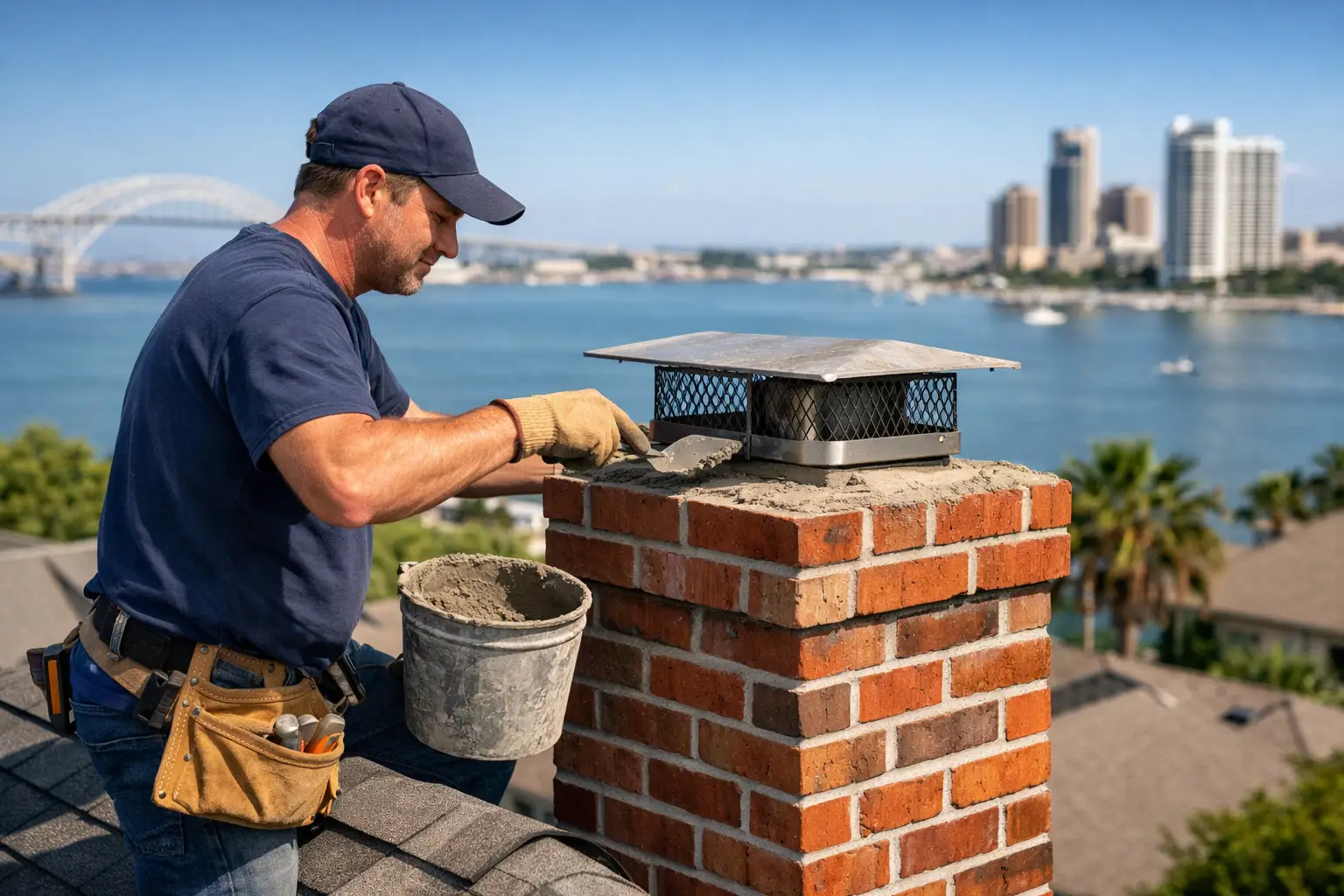
Repointing is one of the most common needs. When mortar joints erode, water gets a direct path into the chimney assembly. Repointing removes deteriorated mortar and replaces it with new material that restores strength and helps keep moisture out. It is a practical repair, but timing matters. If you wait too long, loose brick and more extensive rebuilding may follow.
Flashing repair is another frequent issue, especially where the chimney meets the roof. If flashing pulls away, rusts, or was installed poorly, leaks can show up inside long before the source is obvious. Many property owners assume they need roof repair only to learn the chimney transition is the real problem.
Crown repair or replacement is also common. The crown is the top surface that sheds water away from the flue and masonry below. Once it cracks, water starts working downward into the chimney structure. In Corpus Christi, where storms can push moisture into every vulnerable opening, crown damage should never be brushed off as minor.
Some chimneys need partial rebuilds because brick has spalled, mortar has failed deeply, or the stack has started to lean. In those cases, spot repairs may not hold for long. A good contractor will tell you when repair is enough and when rebuilding part of the chimney is the smarter investment.
Why chimney damage often overlaps with roofing and exterior work
One of the biggest mistakes property owners make is treating the chimney as separate from the rest of the building envelope. In reality, chimneys intersect with roofing, attic ventilation, waterproofing, and sometimes structural framing. When one part fails, nearby materials often suffer with it.
For example, a roof leak near a chimney may come from damaged shingles, failed flashing, deteriorated masonry, or a combination of all three. If different contractors handle those issues independently, important details can get missed. That creates finger-pointing, repeat leaks, and extra cost.
This is why many home and commercial property owners prefer a contractor that can evaluate the whole area rather than just one trade scope. When chimney repair, roofing, and exterior construction are coordinated together, the work tends to move faster and hold up better.
Signs you should call a chimney repair contractor Corpus Christi residents trust
Some warning signs are obvious. Others are easier to overlook until repairs get more involved.
Cracked mortar, loose brick, a visible tilt, rusted flashing, missing chimney caps, and white staining on masonry are all worth attention. Water stains on ceilings or walls near the fireplace are another strong signal that the chimney system or surrounding roof area needs professional review.
You may also notice musty odors after rain, deteriorating interior surfaces around the chimney chase, or pieces of mortar collecting below the stack. On commercial properties, tenants or staff may report leaks near exterior walls without realizing the chimney is part of the cause.
The main point is simple: if the chimney is showing wear, waiting usually raises the price of repair. Moisture intrusion does not pause on its own.
How to choose the right contractor for the job
Not every masonry or roofing company approaches chimney repair with the same level of detail. In Corpus Christi, you want a contractor who understands both masonry repair and the roofing connection, especially in a coastal environment.
Start with experience in local construction conditions. Materials perform differently near the coast, and repair methods need to account for weather exposure, drainage, and code expectations. The contractor should also be comfortable explaining what is failing, why it happened, and whether the repair will affect the surrounding roof or structure.
Clear estimating matters too. A trustworthy contractor will outline the repair scope, identify any related issues, and set expectations about what is known now versus what may only be confirmed once damaged materials are opened up. That kind of communication is not sales language. It is how projects stay on track.
It also helps to work with a contractor that can manage broader repairs if needed. If chimney damage has already affected the roof deck, fascia, framing, or interior finishes, having one accountable team can save time and reduce stress. That is one reason property owners across the Coastal Bend turn to companies like Coastal Roofing and Construction for projects that cross multiple scopes.
Repair now or replace later? It depends on the condition
A lot of owners ask whether a chimney should be repaired or rebuilt. The honest answer is that it depends on the extent of deterioration, the age of the chimney, and whether the damage is cosmetic, structural, or water-related.
If the masonry is largely sound and the problem is limited to mortar joints, flashing, or the crown, targeted repair is often the most cost-effective route. If the chimney has widespread brick failure, significant leaning, or repeated moisture damage after past repairs, partial or full rebuilding may be the better long-term choice.
Budget matters, but so does durability. A cheaper patch may make sense for a short-term issue. It is a poor value if the same area fails again next season. A dependable contractor should walk you through that trade-off without overselling either option.
What good chimney repair looks like when the work is done
Quality chimney repair should leave the structure stable, weather-resistant, and properly integrated with the roof and exterior envelope. The finished work should not just look better from the curb. It should address water entry points, restore damaged materials, and reduce the chance of recurring leaks.
You should also come away with a clear understanding of what was repaired and what to keep an eye on over time. In a coastal market like Corpus Christi, maintenance is part of protecting the investment. Even a well-built chimney benefits from periodic review, especially after heavy storms or major roof work.
If your chimney is showing signs of wear, the right next step is not to wait for more damage to confirm the problem. It is to have it assessed by a contractor who understands how chimneys, roofs, and coastal construction work together – and who is ready to fix it the right way the first time.