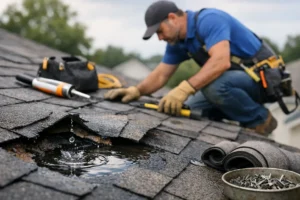
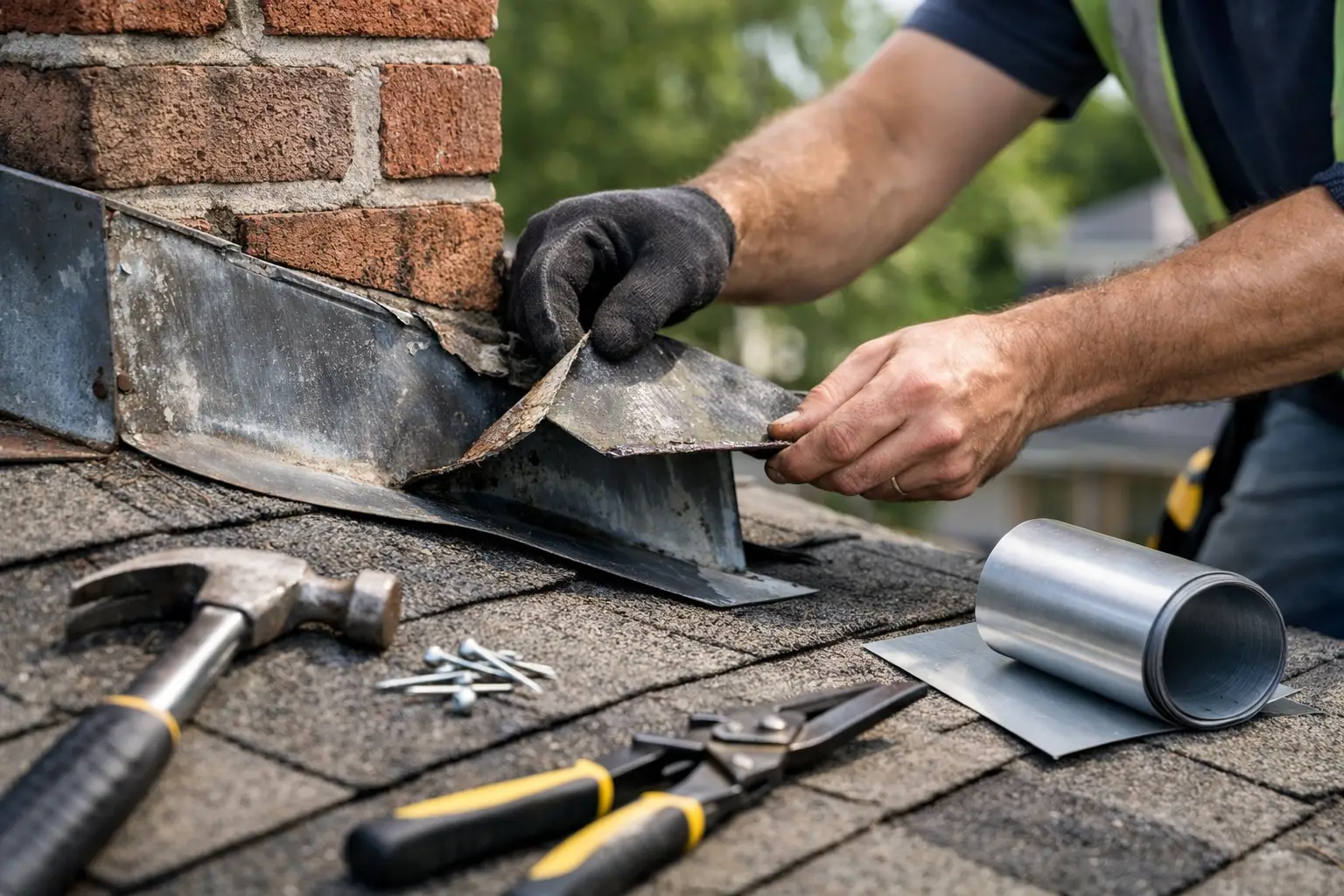
A roof can look fine from the street and still be taking on water around a chimney, vent, skylight, or wall joint. That is usually where flashing does its job, and it is also where small failures turn into expensive repairs. If you are asking when should roof flashing be replaced, the short answer is this: replace it when it stops sealing water out reliably, not just when it looks old.
Flashing is one of the hardest-working parts of a roofing system. It directs water away from seams, roof penetrations, and transitions where leaks are most likely to start. In Corpus Christi and across the Coastal Bend, flashing takes a beating from heat, wind, salt air, heavy rain, and storm activity. That coastal exposure can shorten its useful life, especially if it was installed poorly or paired with aging roofing materials.
When should roof flashing be replaced on a home or building?
The right timing depends on condition, material, roof age, and how the flashing was installed in the first place. There is no one-size-fits-all date stamped on it. Some flashing lasts decades. Some needs replacement much sooner because of corrosion, separation, storm damage, or failed sealant around critical joints.
A good rule is to replace flashing when it shows active signs of failure or when the surrounding roofing system is being replaced. If your roof is nearing the end of its life, patching old flashing into a new roof often creates weak points. On the other hand, if the roof is still in solid shape and the problem is limited to one area, targeted flashing replacement may be the most practical fix.
The signs your roof flashing is no longer doing its job
The clearest warning sign is leaking, but not every flashing issue shows up as a visible drip right away. Water can move behind siding, under shingles, or along framing before it appears indoors. By the time a ceiling stain shows up, the problem may have been developing for a while.
Rust, corrosion, and discoloration are common red flags, especially on metal flashing exposed to salty coastal air. Once corrosion starts eating through the material, it loses its ability to shed water cleanly. Cracks, pinholes, bent edges, and loose sections are also signs that replacement may be more reliable than another repair.
You may also notice deteriorated sealant or roofing cement around flashing details. Sealant has its place, but it is not supposed to be the main waterproofing system forever. If a flashing area has been repeatedly caulked, tarred, or patched, that often means the original detail has already failed.
Inside the property, watch for ceiling stains, peeling paint near roof intersections, damp attic insulation, and musty odors after rain. Around chimneys and walls, masonry damage or visible gaps where flashing meets the surface can point to water intrusion. On commercial properties, bubbling on flat roofing near penetrations or parapet walls may indicate flashing problems rather than a field membrane issue.
Trouble spots where flashing often fails first
Chimneys are one of the biggest problem areas because they involve multiple flashing components and constant expansion and contraction. Roof valleys and wall-to-roof transitions also see heavy water flow, so even a small flaw there can lead to a leak. Vent pipes, skylights, dormers, and roof edges are other areas worth checking after major storms.
In coastal markets, wind can lift surrounding roofing materials and expose flashing edges. Once that happens, rain can get driven into places it would not normally reach. That is why post-storm inspections matter even when there is no obvious damage from the ground.
Repair or replace? It depends on the condition
Not every flashing issue calls for full replacement. If the metal is still sound and the problem is limited to a minor separation, a localized repair may hold up well. That can make sense when the roof is relatively new and the flashing detail was mostly installed correctly.
Replacement becomes the smarter move when the flashing is rusted through, warped, improperly layered, repeatedly patched, or coming apart in multiple areas. It also makes sense when the surrounding shingles, tile, or flat roofing material must be removed anyway to address the issue. At that point, reinstalling old flashing to save a little money today can create a larger cost later.
This is where experience matters. A contractor should look at the whole assembly, not just the visible edge of the metal. The question is not only whether the flashing can be patched, but whether that patch is likely to last through the next storm season.
How long does roof flashing typically last?
Flashing life varies by material and exposure. Copper and high-quality galvanized or coated metal can last a long time under the right conditions. Aluminum can perform well too, but it may be more vulnerable in certain applications or environments. The bigger factor is often workmanship. Even good material fails early if it was face-nailed in the wrong place, poorly sealed, or installed without proper overlap.
In a coastal environment, salt and moisture can accelerate wear, especially on lower-grade metals. Intense sun also breaks down sealants faster. That means flashing in Corpus Christi may not age the same way it would inland. Property owners here should expect more frequent inspections and a lower tolerance for small defects.
As a practical benchmark, flashing should be evaluated any time the roof is more than 15 to 20 years old, after major storms, and whenever there are signs of leaking. If a full roof replacement is on the table, new flashing should usually be part of the scope rather than an optional add-on.
When should roof flashing be replaced during a roof replacement?
Almost always. Reusing old flashing during a new roof installation can compromise the new system from day one. There are limited cases where existing flashing is still in excellent condition and compatible with the new roofing material, but that should be the exception, not the default.
New roofing materials need properly integrated flashing to perform as designed. On shingle roofs, that means step flashing, counter flashing, valley flashing, and penetration details all need to work together with underlayment and water barriers. On tile, slate, and low-slope systems, the flashing details are different, but the principle is the same. Water management is only as strong as the transitions.
For homeowners and commercial property managers, this matters because skipping flashing replacement can create call-backs, interior damage, and warranty headaches. If a proposal leaves flashing vague or treats it as a minor line item, ask questions.
Why coastal weather changes the timeline
Along the Texas coast, wind-driven rain tests flashing harder than normal rain events. Salt exposure can speed up corrosion. Heat cycles can expand and contract metal fast enough to loosen fasteners or separate joints over time. In storm-prone areas, even a small bend or lifted edge can become a leak path under pressure.
That is why a local, hands-on inspection is more valuable than a generic rule of thumb. A roof in the Coastal Bend needs to be judged by coastal conditions, not by a national average pulled from a chart.
What a professional inspection should tell you
A proper inspection should identify whether the flashing failure is isolated or part of a larger roofing problem. It should also confirm whether moisture has already affected decking, underlayment, wall sheathing, chimney areas, or insulation. If those issues are missed, replacing visible metal alone will not solve the full problem.
You should come away with a clear explanation of what is failing, why it is failing, and whether repair or replacement offers the better value. That is especially important on properties with multiple roof types, additions, chimneys, parapet walls, or remodel history. Transitions between old and new construction are often where flashing problems show up first.
For many property owners, the real value is not just stopping the current leak. It is avoiding the cycle of repeat patch jobs that never fully address the source. A contractor that handles roofing and broader construction work can also spot related issues around siding, masonry, trim, or structural transitions that affect flashing performance.
If your roof has started leaking around penetrations, if the metal shows corrosion, or if your roof is being replaced anyway, waiting rarely improves the outcome. The best time to deal with flashing is before hidden water damage spreads into insulation, framing, drywall, or interior finishes. For Coastal Bend property owners, that usually means acting sooner, not later, and making sure the repair is built for the weather this region actually gets.