A roof can look fine from the yard and still have serious problems underneath. If you want to know how to inspect roof decking, the real goal is not just finding rotten wood. It is understanding whether the structure under your roofing material is still solid enough to protect your home or commercial property, especially in a coastal area where moisture, wind, and storm exposure take a toll.
Roof decking is the layer of wood or sheet material fastened to the roof framing. It creates the base for underlayment and the finished roofing system. When that decking starts to weaken, the entire roof assembly is affected. Shingles may not hold correctly, fasteners can loosen, soft spots can develop, and leaks often spread farther than most property owners expect.
Why roof decking inspection matters
Most people do not think about roof decking until a replacement project begins and damaged sections are exposed. By then, what could have been a smaller repair sometimes turns into a broader structural issue. This is especially true after repeated leaks, long-term attic humidity, or storm-related water intrusion.
Along the Texas coast, salt air, wind-driven rain, and sudden weather shifts can speed up wear on roofing systems. Even when the top surface takes the first hit, decking often tells the fuller story. A proper inspection helps you catch warning signs early, budget more accurately, and avoid installing new roofing over compromised materials.
How to inspect roof decking without creating new risk
The safest way to inspect roof decking depends on how much access you have. In many cases, the best view comes from inside the attic, not from walking on the roof. If the roof is steep, wet, storm-damaged, or visibly sagging, do not climb onto it. A weak deck can fail under body weight.
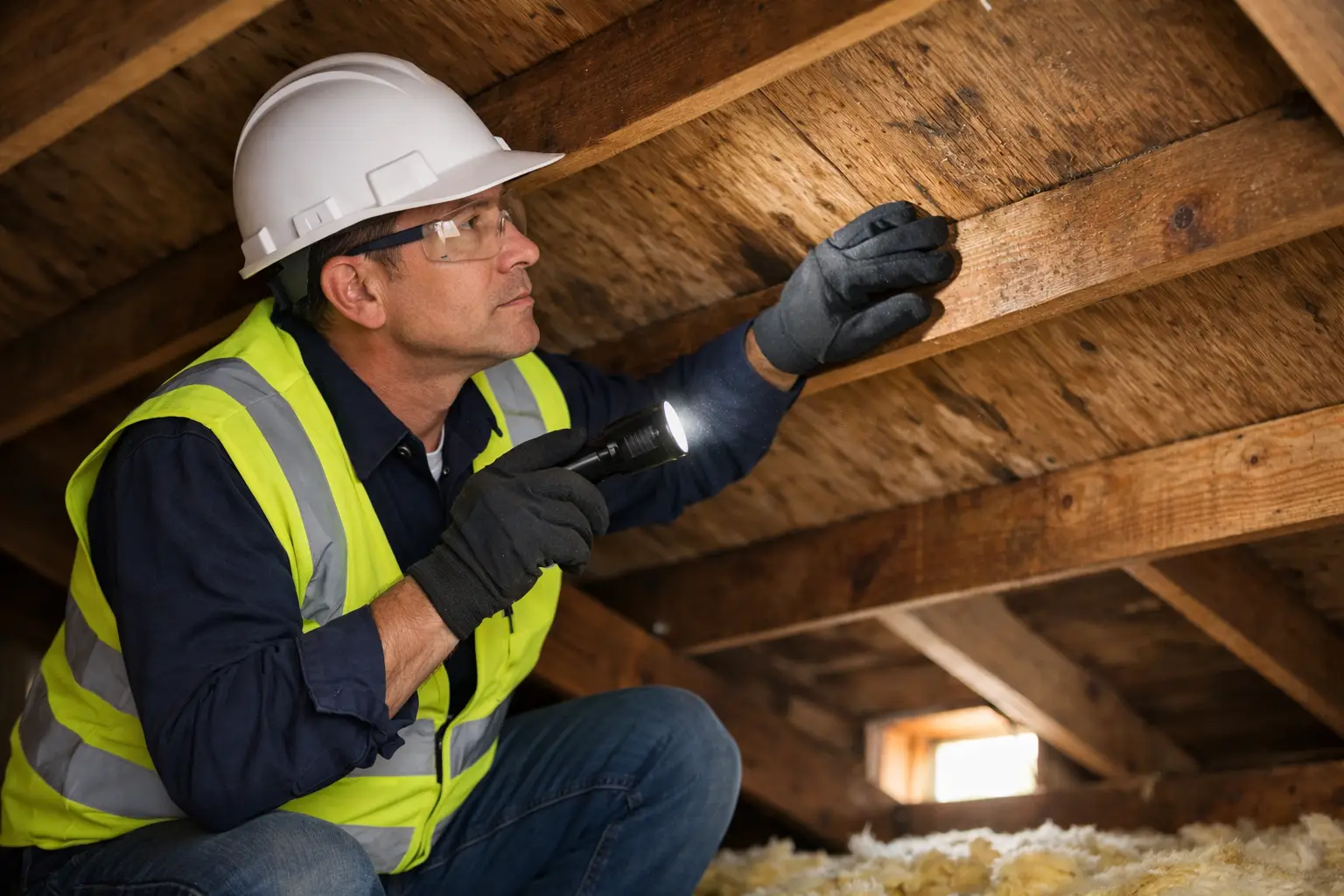
Start with interior access if available. Use a bright flashlight and look at the underside of the roof sheathing from inside the attic. Move carefully and step only on framing members or secure walk boards. Drywall ceilings between joists are not safe to stand on. If the attic has limited clearance, high heat, exposed nails, or electrical hazards, it may be smarter to stop and bring in a roofing professional.
Exterior inspection can still help, but it is more indirect. From the ground, look for sagging roof lines, uneven planes, or areas where the roof surface appears wavy. Those signs do not always confirm deck damage, but they often point to underlying problems that deserve a closer look.
What to look for when inspecting roof decking
Water stains and discoloration
Dark staining on the underside of the decking is one of the most common signs of a leak. Some stains are old and dry, while others indicate active moisture. Fresh water intrusion may leave damp areas, a darker color pattern, or even visible dripping after rain.
Pay attention to areas around roof penetrations such as vents, chimneys, skylights, and valleys. These are common leak points. If staining is isolated, the decking may still be structurally sound. If the wood feels soft, flaky, or swollen, the damage is more serious.
Soft spots, rot, or delamination
If you can safely reach an exposed section from the attic side, gently press the wood with a screwdriver or similar tool. Solid decking should feel firm. If the tool sinks in easily, the material may be rotted or deteriorated.
Plywood and OSB can fail differently. Plywood may show layered separation, while OSB often swells and breaks down along edges when exposed to moisture. Once the panel loses structural integrity, repair or replacement is usually needed.
Mold or mildew growth
Mold on roof decking does not always mean the roof is leaking. Sometimes the problem is poor attic ventilation, trapped humidity, or a bathroom fan venting into the attic. Still, mold growth is a sign that moisture has been present long enough to affect the material.
A small patch of surface growth may be manageable if the source is corrected quickly. Widespread mold, repeated condensation, or blackened sheathing usually calls for a more thorough inspection because the issue may involve both roofing and ventilation performance.
Sagging or uneven decking
A deck that sags between rafters or trusses may be weakened by prolonged moisture exposure or undersized materials. From inside the attic, sight down the roof plane and look for dips or bowing. From outside, check whether the ridgeline and roof surfaces appear straight.
Some older homes have slight unevenness that has been there for years. The concern is when sagging is growing, concentrated in one area, or paired with water damage, cracked interior finishes, or roofing movement.
Nail pops and fastener issues
Roof decking problems do not always show up as rot. Sometimes the first clue is fastener movement. If nails are backing out or daylight is visible around penetrations, the decking may have expanded, shifted, or weakened.
This matters during roof replacement because new shingles or other roofing materials rely on secure fastening. If the deck cannot hold nails properly, the roof system will not perform the way it should in high wind conditions.
Attic signs that point to deck trouble
You do not always need a perfect line of sight to suspect decking damage. Musty odors, unusually high attic humidity, wet insulation, rusted nail tips, and stained rafters can all point to moisture issues above. These clues matter because roof decking often suffers quietly before obvious ceiling leaks appear inside living spaces.
If you manage a commercial property, watch for the same pattern at a larger scale. Water marks on ceiling tiles, recurring leak complaints in the same area, and rooftop equipment penetrations are all signs that the underlying deck may need attention.
When a visual check is not enough
Knowing how to inspect roof decking also means knowing the limits of a do-it-yourself review. You can spot warning signs, but you may not be able to confirm the full extent of the damage without removing roofing materials. That is often where hidden problems are found.
For example, a roof may show only minor staining from inside the attic, but once shingles and underlayment are removed, several sheets of decking may be soft around flashing details or along eaves. On the other hand, some stains look severe but come from an older leak that has already been corrected, with the decking still structurally sound. That is why condition matters more than appearance alone.
When roof decking should be repaired or replaced
Minor isolated damage can sometimes be repaired by replacing a limited section of decking. This works best when the surrounding material is dry, strong, and properly supported. If the damage spreads across multiple panels, affects fastening strength, or involves structural sagging, broader replacement is usually the safer path.
Age also matters. During a full roof replacement, many property owners choose to replace damaged decking as the roof is opened rather than patching questionable sections and hoping for the best. That approach typically gives the new roof a better foundation and reduces the chance of callbacks later.
In coastal conditions, that decision can be even more practical. Wind resistance depends on a complete roof assembly working together, from decking and fasteners to underlayment and final roofing material.
Safety matters more than curiosity
If there is one point worth taking seriously, it is this: roof decking inspection should never put you in a dangerous position. Wet roofs, high slopes, storm damage, and hidden soft spots are not conditions to test on your own. The same goes for older commercial roofs where membrane surfaces can hide deterioration underneath.
A professional inspection is especially worthwhile after hurricanes, strong coastal storms, repeated leaks, or before a roof replacement project. A qualified contractor can assess not just whether the decking is damaged, but how that damage affects the full roofing system, ventilation, and repair scope.
At Coastal Roofing and Construction, that kind of inspection is part of responsible project planning. Property owners in Corpus Christi and across the Coastal Bend need clear answers, not guesswork, especially when storm exposure and moisture can turn a small issue into a larger one.
If you are checking your attic and something looks off, trust that instinct. A dark stain, a soft panel, or a sagging line may be the first sign that your roof needs attention. Catching it early gives you more options, better control over cost, and a much better chance of protecting the structure before the next round of coastal weather rolls in.