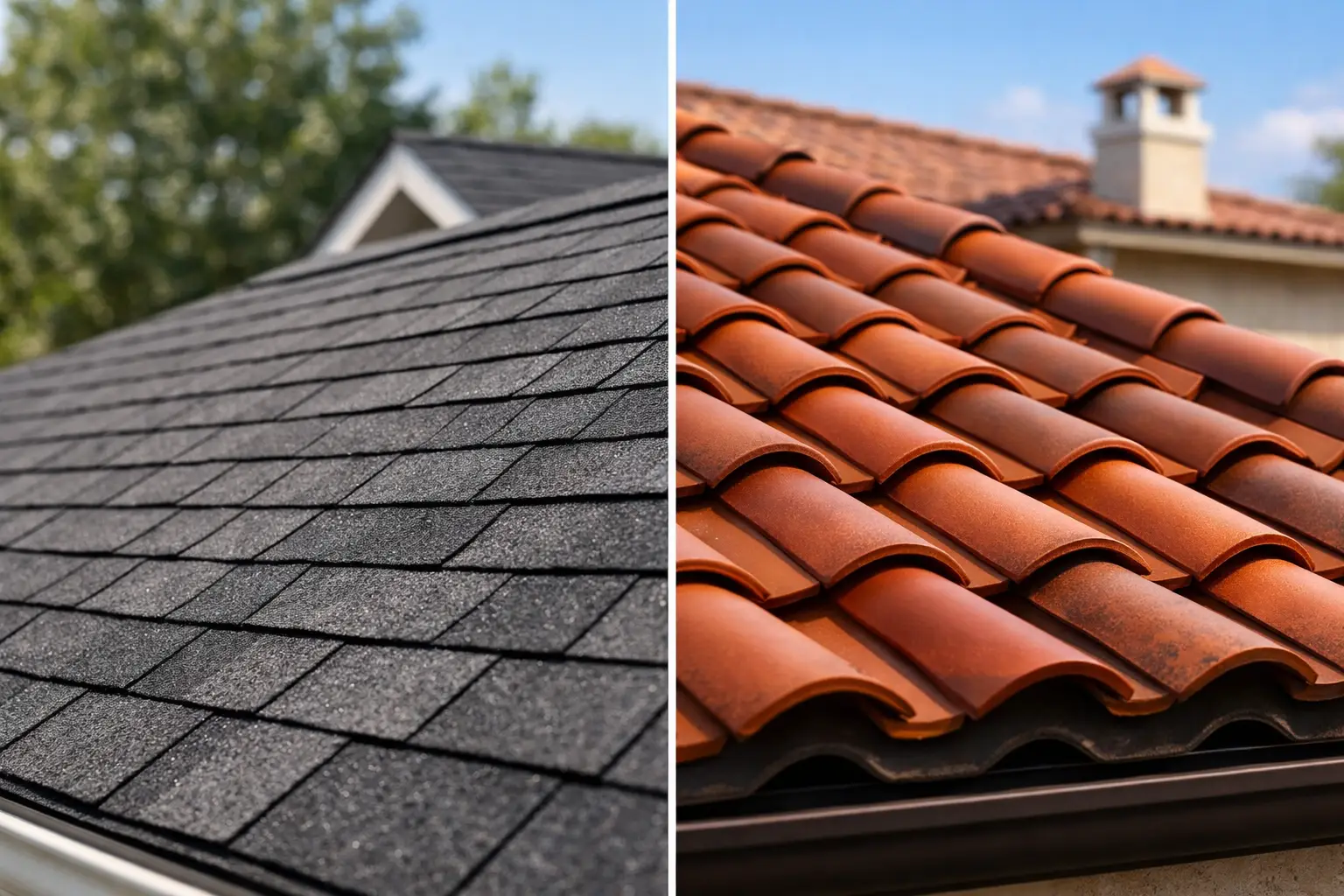
If you own property in South Texas, your roof choice is not just about curb appeal. The shingle roof versus tile decision affects storm performance, long-term cost, maintenance, and even how your home handles coastal heat. Around Corpus Christi and the Coastal Bend, that choice deserves a practical look grounded in real jobsite conditions, not just brochure claims.
Shingle roof versus tile in the Coastal Bend
Both roofing systems can perform well when they are installed correctly and matched to the structure beneath them. That said, they solve different problems for different property owners.
Asphalt shingles are the more common choice because they are cost-effective, widely available, and faster to install. Tile roofs, whether clay or concrete, are usually selected for their longer service life, distinctive appearance, and strong resistance to sun exposure. The right answer depends on your budget, the framing of your home, your long-term plans, and how much importance you place on appearance versus upfront cost.
In a coastal market, it also matters how your roof handles wind, salt air, moisture, and heat. A material that works fine in another part of Texas may bring different maintenance needs near the water.
Upfront cost is where the gap shows first
For most homeowners, budget is the first filter. Shingle roofing typically comes in at a much lower initial cost than tile. Materials are less expensive, labor is generally more straightforward, and installation moves faster. If you need a full roof replacement without expanding the project into structural changes, shingles are often the more manageable option.
Tile usually costs more for a reason. The materials themselves are heavier and more expensive, and the installation process requires more specialized handling. In some cases, the roof framing may need reinforcement before tile can be installed safely. That added structural work can significantly increase the total project cost.
This does not mean tile is overpriced. It means the investment starts higher. For some owners, especially those planning to stay in the home for many years, that higher price can make sense. For others, the lower upfront cost of shingles leaves room in the budget for other needed upgrades.
Lifespan matters, but so does how long you will own the property
Tile is known for longevity. A properly installed tile roof can last for decades and often outlasts a standard asphalt shingle system. That is one of its biggest selling points.
Shingles generally have a shorter service life, especially in climates with strong UV exposure, heat, and severe weather. Along the Texas coast, sun and storm cycles can wear roofing materials faster than many homeowners expect. Even a quality shingle roof will usually need replacement sooner than tile.
Still, lifespan should be weighed against your plans. If this is your forever home, tile may be worth serious consideration. If you expect to sell in the next several years, a new shingle roof may deliver the right balance of appearance, performance, and return without the heavier investment.
Wind and storm performance are not one-size-fits-all
When people compare roofing materials in hurricane-prone areas, they often assume heavier means stronger. It is not that simple.
A properly installed shingle roof can perform very well in high winds, especially when modern systems and correct fastening methods are used. Product selection matters, but installation quality matters just as much. Poorly installed shingles are vulnerable. Well-installed shingles rated for wind resistance are a different story.
Tile can also perform well, but individual tiles may crack, loosen, or break under impact or extreme wind conditions if the system is not installed and maintained correctly. Tile roofs are durable, but they are not maintenance-free armor. Their performance depends on attachment methods, underlayment quality, flashing details, and the overall condition of the roof assembly.
In coastal conditions, the real question is less about which material sounds tougher and more about which system is right for your structure and installed to current code. That is where local experience matters.
Appearance and home style can tip the scale
Some choices come down to function. Others affect the entire look of the property. Roofs do both.
Shingles fit a wide range of home styles and come in many colors and profiles. They can give a house a clean, updated look without dominating the architecture. For many neighborhoods, that is exactly what homeowners want.
Tile creates a more distinct visual statement. On Mediterranean, Spanish, Southwest, and certain custom homes, tile can look like the roof the house was always meant to have. It adds character and often boosts perceived value.
But appearance should still be tied to practicality. A tile roof on a house that was not designed for it may require structural upgrades and architectural adjustments that are easy to overlook at the estimate stage.
Weight is not a minor detail
One of the biggest differences in the shingle roof versus tile conversation is weight. Asphalt shingles are relatively lightweight. That makes them compatible with most homes without requiring major framing changes.
Tile is much heavier. Before installing it, the structure needs to be evaluated to confirm it can carry that load safely and meet local requirements. Skipping that step is not an option.
For homeowners, this means the roof material decision can turn into a broader construction decision. If reinforcement is needed, that adds cost, time, and coordination. Working with a contractor who understands both roofing and structural scope can make that process much smoother.
Maintenance looks different for each system
No roof is zero-maintenance, especially near the coast.
Shingle roofs are generally easier and less expensive to inspect and repair. If wind damages a section, repairs can often be more straightforward. Over time, though, shingles may lose granules, curl, or age unevenly in intense sun.
Tile roofs resist UV exposure well, but maintenance can be more specialized. The tiles themselves may last a long time, while the underlayment beneath them may eventually need attention first. Also, walking on tile requires care. A simple service call can become more delicate because cracked tiles are a real risk.
That is why homeowners should think beyond the word durable. Long life does not always mean low service complexity.
Energy efficiency is part material, part system design
Many property owners ask whether tile is more energy efficient. In many cases, tile can help with heat performance because of the way it handles sun exposure and airflow. That can be beneficial in hot South Texas conditions.
Shingles can also perform well when paired with the right attic ventilation, insulation, and roofing components. A cooler, more efficient home is rarely the result of one material alone. It comes from how the whole roof system is built.
If energy savings are a major goal, it is smart to look at ventilation, insulation, reflective options, and attic conditions along with roofing material. That gives you a more accurate picture than comparing tiles and shingles in isolation.
Which option makes more sense for your property?
If you want lower upfront cost, broad design flexibility, and a roofing system that works well for many homes, shingles are often the practical choice. They are especially attractive when the structure does not need additional work and the goal is a dependable replacement with strong value.
If you want a longer-lasting roof, a more distinctive architectural look, and you are comfortable with a higher initial investment, tile may be the better fit. It is often a strong option for homeowners planning to stay put and invest in the property over the long term.
For commercial properties or mixed-use buildings, the answer can vary even more. Roof slope, building design, occupancy needs, budget cycles, and maintenance planning all play a role. There is no single best material across every property type.
At Coastal Roofing and Construction, these are the kinds of decisions we help owners work through every day. The right recommendation should match the building, the budget, and the real conditions on site.
A roof is too expensive to choose based on photos alone. The best next step is to look at your structure, your goals, and how long you want the solution to serve you. Once those pieces are clear, the right roofing system usually becomes clear too.