
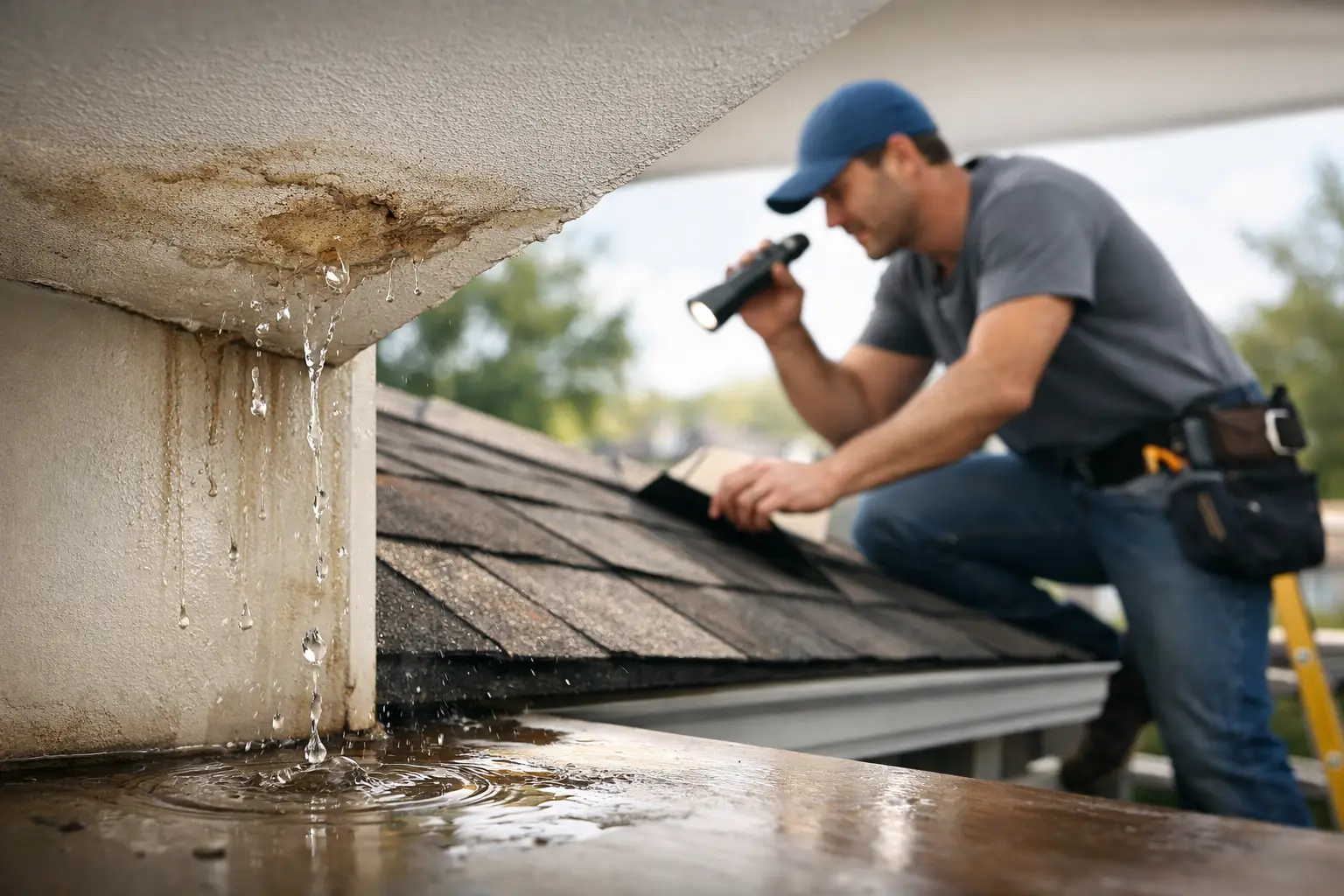
A roof leak rarely starts with water pouring from the ceiling. More often, it begins with a faint stain, a musty smell, or a small bubble in the paint that is easy to ignore until the damage spreads. If you are trying to learn how to spot roof leaks early, the goal is simple: catch the warning signs before moisture reaches insulation, framing, drywall, and flooring.
That matters even more along the Texas coast. In Corpus Christi and across the Coastal Bend, roofs take a steady beating from wind, salt air, heavy rain, and intense sun. Small weaknesses do not stay small for long in this environment, and what looks like a minor issue inside can trace back to a larger roofing problem outside.
How to spot roof leaks from inside first
Most property owners notice a leak indoors before they ever see the damaged area on the roof. That does not mean the leak started there. Water often travels along decking, rafters, or underlayment before it shows itself, so the visible stain may be several feet away from the actual entry point.
Start with ceilings. Brown or yellow water stains are the most obvious red flag, especially if they grow after a storm. Fresh leaks may also appear as darker damp spots with no major discoloration yet. If the ceiling texture is peeling, sagging, or bubbling, water has likely been present for more than a day or two.
Walls can tell the same story. Paint that blisters, drywall that swells, or trim that begins to separate may point to water moving downward from the roofline. Around windows, it can be harder to tell whether the source is roofing, siding, or flashing, so this is one of those situations where the cause depends on the building details.
Attics are one of the best places to inspect if you want to know how to spot roof leaks before they become obvious in living areas. Look for wet insulation, darkened wood, mold growth, or streaking on the underside of the roof decking. If sunlight is visible through the roof boards or around penetrations, that opening may also be allowing water in.
A musty odor also deserves attention. Even if you do not see active dripping, trapped moisture in insulation, decking, or drywall often creates a damp smell before damage becomes visible.
The outdoor signs homeowners often miss
Once you have checked the interior, the next step is a careful exterior review from the ground. You do not need to climb onto the roof to notice several common leak indicators.
Look for missing, cracked, curling, or lifted shingles. On asphalt systems, these weak points can let water work underneath during wind-driven rain. On tile or slate roofs, a slipped, broken, or displaced piece can create the same problem. Flat and low-slope roofs may show ponding water, membrane splits, seam separation, or surface blistering.
Flashing is another major trouble spot. The metal pieces around chimneys, vents, skylights, valleys, and wall transitions are designed to direct water away from openings. When flashing rusts, loosens, or pulls away, leaks often follow. In coastal conditions, corrosion can move faster than many owners expect.
Pay attention to roof penetrations and edges. Plumbing vents, exhaust caps, satellite mounts, and fasteners can all create vulnerable points over time. If the rubber boot around a vent pipe has cracked or the sealant is dried out, water may be getting in with each storm cycle.
Gutters can also offer clues. If they are packed with granules from asphalt shingles, the roof may be aging and losing its protective surface. If gutters overflow because of clogs or poor drainage, water can back up along the roof edge and find its way into fascia, soffits, and wall assemblies.
Where roof leaks usually begin
Not every roof leak comes from storm damage. Sometimes the issue is wear and tear, aging materials, or an installation detail that finally gives out under pressure.
Roof valleys are common leak areas because they handle a high volume of runoff. If shingles were not woven correctly, flashing is damaged, or debris blocks drainage, water can work beneath the surface.
Chimneys are another frequent source. Mortar joints can crack, chimney caps can fail, and flashing around the base can separate. Around skylights, the glass may be fine while the surrounding flashing or seals are not.
On commercial properties and flat roofing systems, standing water, punctures, failing seams, and drainage issues are often the bigger concern. A leak may show up inside as a stain in one room, but the actual opening could be across the roof where water has been sitting after repeated rains.
If your property has recently had other work done, keep that in mind too. HVAC service, satellite installation, solar work, or even holiday lighting anchors can create roof penetrations that later turn into leaks if they were not sealed correctly.
How to check after a storm
Strong wind and heavy rain can create a leak overnight, especially in the Coastal Bend. After a major storm, it is smart to do a quick check even if you do not see obvious damage.
Walk the perimeter and look for debris impact, displaced roofing materials, bent flashing, or pieces of shingle in the yard. Inside, check ceilings, attic access points, upper-story walls, and around vents or chimneys. If a new stain appears after a storm and then seems to dry out, do not assume the problem is over. That usually means water got in once, and it will likely happen again under the right conditions.
This is also where timing matters. Active leaks are easier to trace when the evidence is fresh. Waiting several weeks can allow materials to dry, stains to spread, and the original source to become harder to pinpoint.
When a leak is not really a roof leak
One reason leak diagnosis can get tricky is that not every water spot points to roofing failure. HVAC condensation lines, plumbing leaks, window failures, and siding issues can all mimic a roof leak.
That is why pattern matters. If the stain grows after rain, the roof is a likely suspect. If moisture appears regardless of weather, the source may be mechanical or plumbing related. In attic spaces, condensation can also build up when ventilation is poor, especially around ducts or bathroom exhausts.
A good inspection looks at the whole assembly instead of jumping to conclusions. The repair that saves money is the one that fixes the actual source the first time.
When to call a roofing professional
If you see active dripping, ceiling sagging, widespread staining, mold, or visible roof damage, it is time to bring in a professional. The same goes for flat roof issues, chimney flashing concerns, or any leak that keeps returning after patch work.
Temporary fixes have their place, but they are not a long-term strategy. Caulk applied in the wrong place can trap water, and surface patching can hide damage without solving it. A proper inspection should identify where water is entering, how far it has traveled, and whether the issue calls for a targeted repair or broader roof work.
For coastal homes and commercial buildings, that experience matters. Wind exposure, salt air, and code requirements all affect how a roof should be evaluated and repaired. Coastal Roofing and Construction works with property owners across Corpus Christi and the surrounding area who need straightforward answers, solid workmanship, and a clear plan to stop leaks before they turn into structural damage.
How to reduce the chances of future leaks
The best way to deal with a roof leak is to catch it before it becomes an emergency. That starts with regular inspections, especially after storms and before hurricane season. Keep gutters clear, trim branches away from the roofline, and pay attention to small interior changes that seem cosmetic at first.
If your roof is older, has already had repairs, or has complex transitions like skylights, chimneys, and multiple roof planes, it makes sense to be more proactive. Some roofs need simple maintenance. Others are reaching the point where repeated repairs stop being cost-effective. It depends on the age of the system, the material type, and how widespread the weak spots have become.
A small stain is easy to put off when life is busy. But roofs do not usually reward waiting. If something looks off, trust that instinct and have it checked while the fix is still manageable.