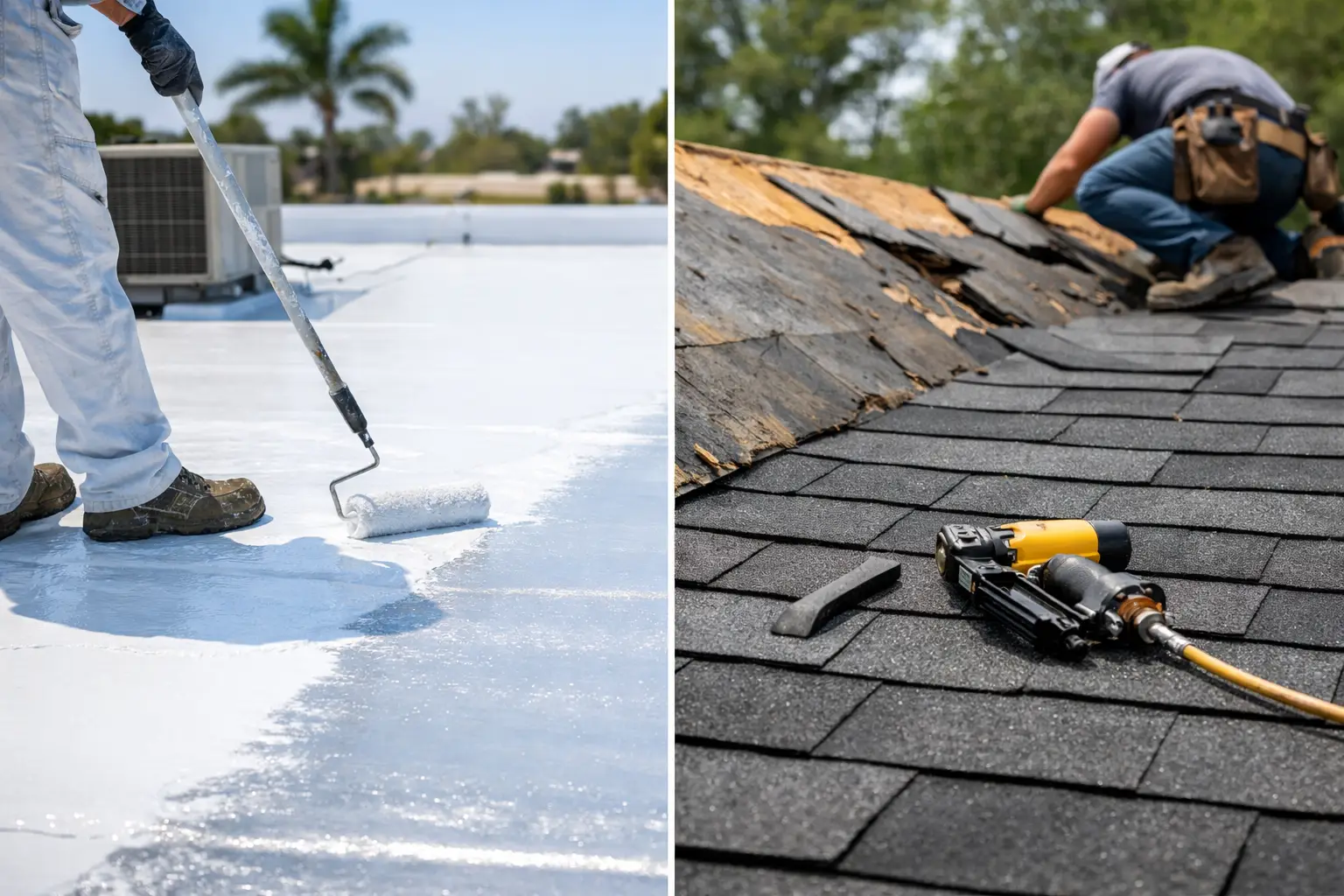
A roof that still looks decent from the parking lot can be hiding expensive problems up close. That is why the roof coating versus replacement decision should never come down to price alone. For property owners in Corpus Christi and across the Coastal Bend, salt air, wind, heat, and storm exposure can shorten the life of roofing systems fast, and the wrong fix can leave you paying twice.
If you are weighing these two options, the first thing to know is simple: a coating is not a shortcut to avoid a failing roof, and a replacement is not always the only responsible answer. The right path depends on the roof type, its current condition, how much moisture is already trapped in the system, and how long you plan to hold the property.
Roof coating versus replacement: the real difference
Roof coating is a restoration method. It adds a protective layer over an existing roof system to help extend service life, improve reflectivity, and reduce wear from sun and weather. It works best when the underlying roof is still structurally sound and dry.
Roof replacement is a full reset. The old roofing materials are removed down to the appropriate level, damaged substrate is addressed, and a new roof system is installed. This is the better option when the roof has widespread deterioration, active leaks in multiple areas, storm damage, saturated insulation, or structural concerns.
That distinction matters. A coating treats the surface and can restore performance on a viable roof. A replacement addresses failures beneath the surface and gives you a new lifespan clock. One is preservation. The other is reconstruction.
When a roof coating makes sense
A coating can be a smart investment when the roof has aged but has not failed. On many commercial and low-slope roofing systems, coatings are used to seal minor weathering, protect against UV exposure, and delay full replacement. That can be especially useful in South Texas, where heat and sun can wear down roofing materials year after year.
The key is condition. If inspections show that the membrane is largely intact, seams are repairable, drainage is manageable, and moisture intrusion is limited or nonexistent, a coating may buy valuable time. It can also be attractive for owners trying to control short-term capital costs while maintaining building performance.
There are practical benefits beyond cost. Coatings often involve less disruption to business operations than a full tear-off. For occupied commercial buildings, that matters. Less noise, less debris, and shorter installation windows can make coatings appealing for offices, retail properties, and facilities that cannot afford major interruption.
That said, not every roof is a candidate. If a contractor recommends coating without a detailed inspection, moisture evaluation, and discussion about the roof’s remaining integrity, that is a red flag.
What coatings can and cannot do
A quality roof coating can help reflect sunlight, slow down surface aging, and protect an existing roofing system from further exposure. It may also help reduce interior heat gain depending on the building and roof assembly.
What it cannot do is fix rotten decking, reverse soaked insulation, correct major design issues, or make a damaged roof structurally sound. If leaks are coming from widespread failures, a coating may cover symptoms without solving the cause.
When replacement is the better call
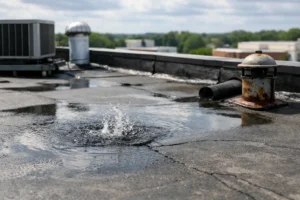
Replacement becomes the better investment when repairs are stacking up and the roof has moved beyond restoration. If you are dealing with recurring leaks, soft spots, visible deterioration, ponding problems, lifted materials, or hidden water damage, replacing the roof is often the more honest and cost-effective solution.
For homes, this is especially true when shingles are brittle, curling, missing across broad sections, or the underlayment and decking have been compromised. For commercial properties, replacement is more likely when the membrane is failing in multiple areas, insulation is saturated, or previous patchwork has created an unreliable surface.
In the Coastal Bend, storm history matters too. Wind-driven rain can find weaknesses that are not obvious until the next major weather event. A roof that barely holds through one season may not hold through the next. In those cases, replacement is less about appearance and more about protecting the building envelope.
There is also the long-term planning side. If you intend to keep the property for many years, a full replacement can offer better value than paying for a coating now and a replacement later. It gives you a fresh system, current materials, and a clearer maintenance timeline.
Cost is important, but value matters more
Most owners start with budget, and that is reasonable. Coatings usually cost less upfront than replacement. That lower entry cost is often what puts them on the table in the first place.
But lower cost does not automatically mean better value. If a coating adds several productive years to a sound roof, it can be an excellent investment. If it is applied over a roof with hidden moisture or failing components, it may only delay the inevitable and increase total spend.
Replacement requires more upfront investment, but it also resets the roof’s service life and reduces the risk of ongoing repair costs. On some buildings, that predictability is worth more than a temporary savings.
A good contractor should be able to walk you through both numbers honestly. That includes expected lifespan, repair exposure, disruption, warranty considerations, and the condition of the roof below the surface. Without that context, comparing price alone is not a real comparison.
Coastal conditions change the equation
In inland markets, a marginal roof might limp along longer. Along the Texas coast, that margin gets thinner. Salt exposure, intense UV, humidity, heavy rain, and seasonal storms all put added stress on roofing systems.
That is why roof coating versus replacement has to be evaluated with local conditions in mind. A solution that looks acceptable on paper may not hold up well in Corpus Christi if the roof is already near the edge. Coastal properties often need a more conservative recommendation because the penalty for underestimating roof damage is higher.
This is also where code familiarity and installation quality matter. If replacement is the right move, details such as fastening patterns, flashing execution, drainage strategy, and material compatibility become critical. If coating is the right move, surface prep, repairs, and product selection are just as important. Neither option performs well when shortcuts are taken.
Questions worth asking before you decide
Before you approve either route, ask what the inspection found beyond the visible surface. Ask whether there is trapped moisture, whether the substrate is sound, and how much of the roof has active or past leak evidence. Ask how long the proposed solution is realistically expected to last in this climate, not in ideal conditions somewhere else.
You should also ask about future plans for the property. If you are holding the building for a short period, a coating may line up with your goals. If this is your home, your long-term commercial asset, or a facility you rely on every day, replacement may provide stronger protection and fewer surprises.
A dependable roofing contractor should not push the same answer for every project. Some roofs truly are good candidates for restoration. Others need a full replacement, and saying otherwise only creates bigger problems later.
The best choice starts with an honest inspection
The right recommendation comes from what the roof is telling you, not from a sales pitch. At Coastal Roofing and Construction, that means looking at the full picture – age, damage, moisture risk, system type, storm exposure, budget, and your plans for the property.
Some roofs need the extended life and lower disruption that a coating can offer. Others need the certainty of replacement so the building is protected the right way. If you are trying to make the call, the most useful next step is not guessing from the ground. It is getting a clear assessment from a local team that knows how Coastal Bend roofs actually perform when the weather turns.