A small roof issue rarely stays small on a commercial building. What starts as a loose seam, clogged drain, or cracked flashing can turn into interior damage, tenant complaints, lost business time, and a much bigger repair bill. That is why a solid commercial roof maintenance guide matters for owners and property managers who want fewer surprises and more control over long-term costs.
Along the Texas coast, that need gets even more urgent. Commercial roofs in Corpus Christi and across the Coastal Bend deal with heat, wind, salt air, heavy rain, and storm seasons that can expose weak points fast. Maintenance is not just about preserving the roof surface. It is about protecting operations, inventory, equipment, and the rest of the building envelope.
What a commercial roof maintenance guide should actually help you do
A useful guide should not bury you in technical language. It should help you spot risk early, understand what deserves immediate attention, and put a realistic plan in place for inspections, repairs, and documentation. For most commercial properties, the goal is simple: extend roof life, reduce emergency calls, and avoid letting minor defects spread into structural or interior problems.
That sounds straightforward, but every roof has its own variables. Roof type matters. Building use matters. Age matters. A warehouse, medical office, retail center, church, and apartment complex may all have different traffic patterns, drainage demands, and tolerance for disruption. Maintenance should reflect that reality instead of following a one-size-fits-all schedule.
Start with the roof system you have
Before you can maintain a roof properly, you need a clear picture of what is installed. Many commercial owners inherit buildings without complete records, which makes decision-making harder than it needs to be. If you do not already know the system, start there.
Single-ply roofs like TPO, PVC, and EPDM each wear differently and have different repair methods. Modified bitumen and built-up roofing systems may show age through blistering, splitting, or surface wear. Metal roofing can hold up well in coastal conditions, but fasteners, seams, coatings, and penetrations still need regular attention. Even low-slope roofs that look fine from the ground can hide drainage issues or membrane separation.
The point is not to memorize every material detail. It is to know enough that maintenance decisions match the roof in place. A patch that works on one system may be the wrong move on another.
Inspection timing matters more than most owners realize
Commercial roofs should usually be inspected at least twice a year, with additional checks after major storms or high-wind events. In coastal Texas, storm-related inspections are especially important because wind-driven rain can exploit vulnerabilities that were not obvious before.
Spring and fall are common inspection windows, but your schedule may need to be tighter if the building has a history of leaks, frequent rooftop traffic, aging materials, or drainage concerns. A newer roof under warranty may still need regular documented inspections to keep coverage in good standing. Skipping those visits can create problems later if a claim comes up.
There is also a practical reason to inspect before storm season rather than after. Preventive repairs are usually less disruptive and easier to schedule than emergency response work when contractors are tied up across the region.
The most common problems a maintenance plan should catch
A strong maintenance program focuses on the areas where commercial roofs usually fail first. Flashings around edges, curbs, pipes, skylights, and HVAC penetrations tend to be high-risk points. So do seams, transitions, drains, scuppers, and areas where water sits too long after a rain.
Ponding water is one of the biggest red flags on low-slope roofing. Sometimes the issue is blocked drainage. Sometimes it points to slope problems, deck deflection, or past repairs that changed water flow. It does not always mean immediate replacement is necessary, but it should never be brushed off as normal.
Debris is another common problem that owners underestimate. Leaves, dirt, and windblown trash trap moisture and slow drainage. On the coast, that buildup can also hold salt and grime against roofing materials longer than it should. Add foot traffic from service vendors, and a roof can wear down faster than expected even without a major storm.
Maintenance is not just cleaning the roof
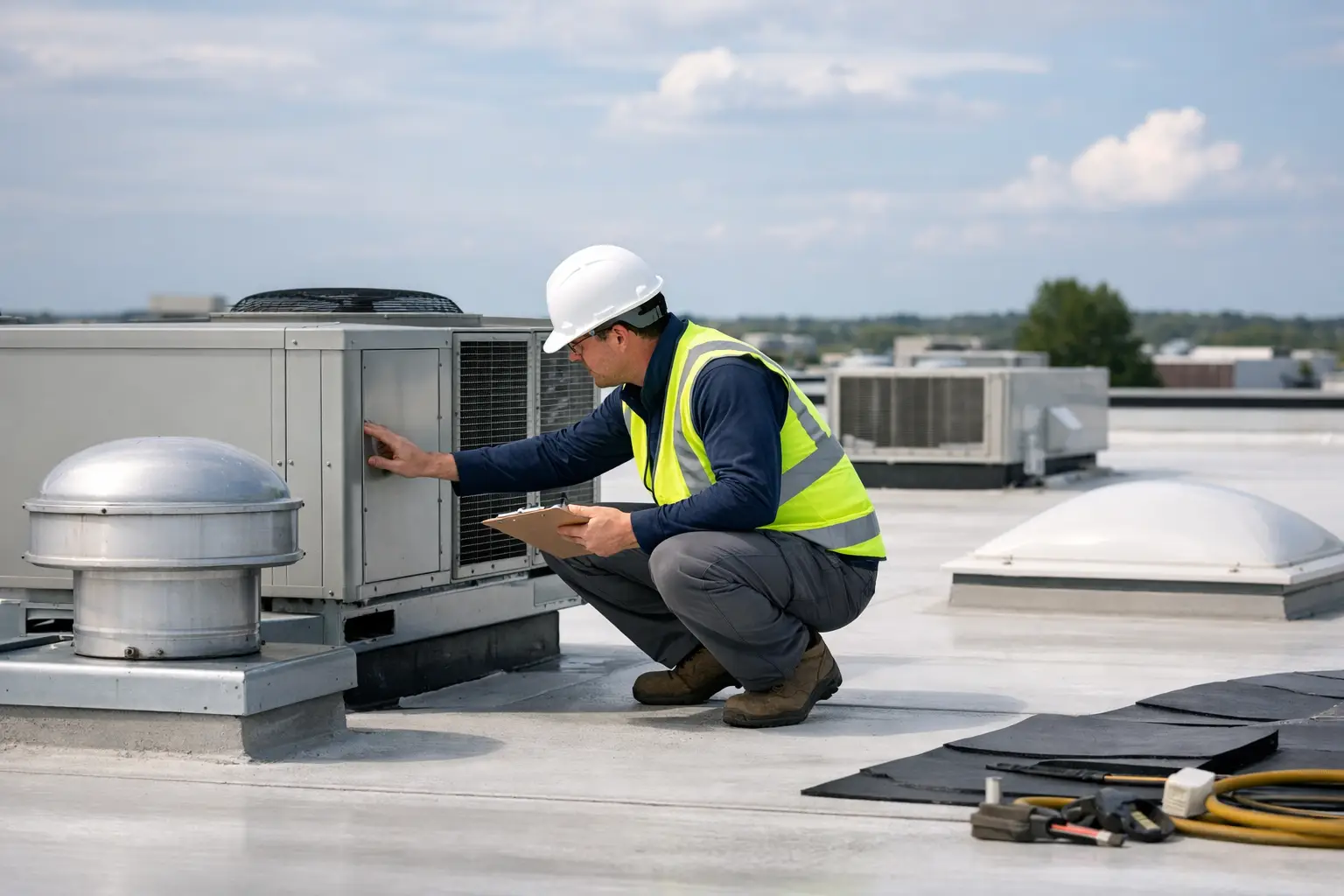
Cleaning has value, but true maintenance goes further. A proper visit should include condition checks, minor corrective work where appropriate, photographic documentation, and clear notes on areas to monitor. If an inspection only results in a quick sweep and no meaningful assessment, it is probably not enough.
That said, not every problem should be repaired the same day without discussion. Sometimes a roof needs a targeted repair right away because water intrusion is active or likely. Other times, it makes more sense to group lower-priority issues into a planned service visit, especially if tenant access, weather timing, or budget approval is involved. Good maintenance balances urgency with common sense.
Why documentation saves money later
One of the most overlooked parts of this commercial roof maintenance guide is recordkeeping. Photos, inspection dates, repair notes, storm observations, and invoices create a service history that helps you make better calls over time. That history can also support insurance discussions, capital planning, warranty compliance, and resale due diligence.
Without documentation, owners end up relying on memory and reacting to symptoms instead of patterns. With documentation, you can see whether a leak is isolated or recurring, whether repairs are holding, and whether the roof is still a good candidate for restoration or nearing the point where replacement makes more financial sense.
For multi-tenant or multi-building properties, this matters even more. Consistent records help prioritize spending across assets instead of making every roof issue feel equally urgent.
Budgeting for maintenance versus waiting for failure
Some owners hesitate to spend on maintenance because the roof is not leaking today. That thinking often leads to higher costs later. Emergency repairs usually come with more disruption, more interior exposure, and fewer options. Once insulation gets wet or interior finishes are affected, the job is no longer just a roof issue.
That does not mean every aging roof needs a major investment right away. Sometimes targeted repairs and routine service can buy valuable time. Sometimes a coating or restoration plan makes sense if the substrate and overall system are still sound. Other times, repeated patching becomes more expensive than addressing the larger problem directly. It depends on roof age, condition, business risk, and how long you plan to hold the property.
A good contractor should be honest about those trade-offs. If the roof still has serviceable life, say so. If it is becoming unreliable and draining money through recurring calls, owners deserve that clarity too.
Coastal conditions change the maintenance conversation
Roof maintenance in Corpus Christi is not the same as roof maintenance in a mild inland market. Salt exposure, intense sun, wind uplift concerns, and severe weather all affect how commercial roofs age. Sealants can dry out faster. Metal components can corrode. Storm debris can cause punctures or drainage blockages in a single event.
That is one reason local experience matters. A contractor familiar with coastal construction will usually look at more than the visible surface. They will pay attention to attachment points, edge details, drainage behavior, flashing durability, and code-related considerations that matter in this environment.
For commercial owners, that local knowledge can help reduce repeat problems. It is easier to maintain a roof well when the service plan reflects the actual climate the building faces every year.
Choosing the right partner for ongoing roof care
Commercial roof maintenance works best when the contractor is organized, responsive, and able to see the full picture of the property. Roof issues often overlap with other building concerns, including fascia, drainage, exterior walls, rooftop equipment coordination, or structural wear around penetrations.
That is where a hands-on contractor can make life easier for owners and managers. Instead of chasing multiple vendors and sorting out who is responsible for what, you want a team that communicates clearly, documents what it finds, and helps you plan next steps without creating confusion. Coastal Roofing and Construction works with that mindset because commercial clients need accountability as much as they need technical skill.
A practical maintenance rhythm for most properties
For many buildings, the right rhythm is straightforward: scheduled inspections twice a year, extra checks after major storms, prompt attention to drainage and flashing issues, and written records after every visit. If the roof has older materials or a history of leaks, increase the frequency. If the building has heavy rooftop traffic from mechanical service providers, make sure that traffic is part of the conversation too.
It also helps to keep unauthorized roof access under control. More damage than owners realize comes from accidental punctures, displaced materials, or poorly handled equipment work. A roof is not just another utility platform. It is a weather barrier, and it should be treated that way.
The best time to get serious about roof maintenance is before a leak forces the issue. A clear plan, regular inspections, and honest guidance can stretch roof life and take a lot of uncertainty off your plate.