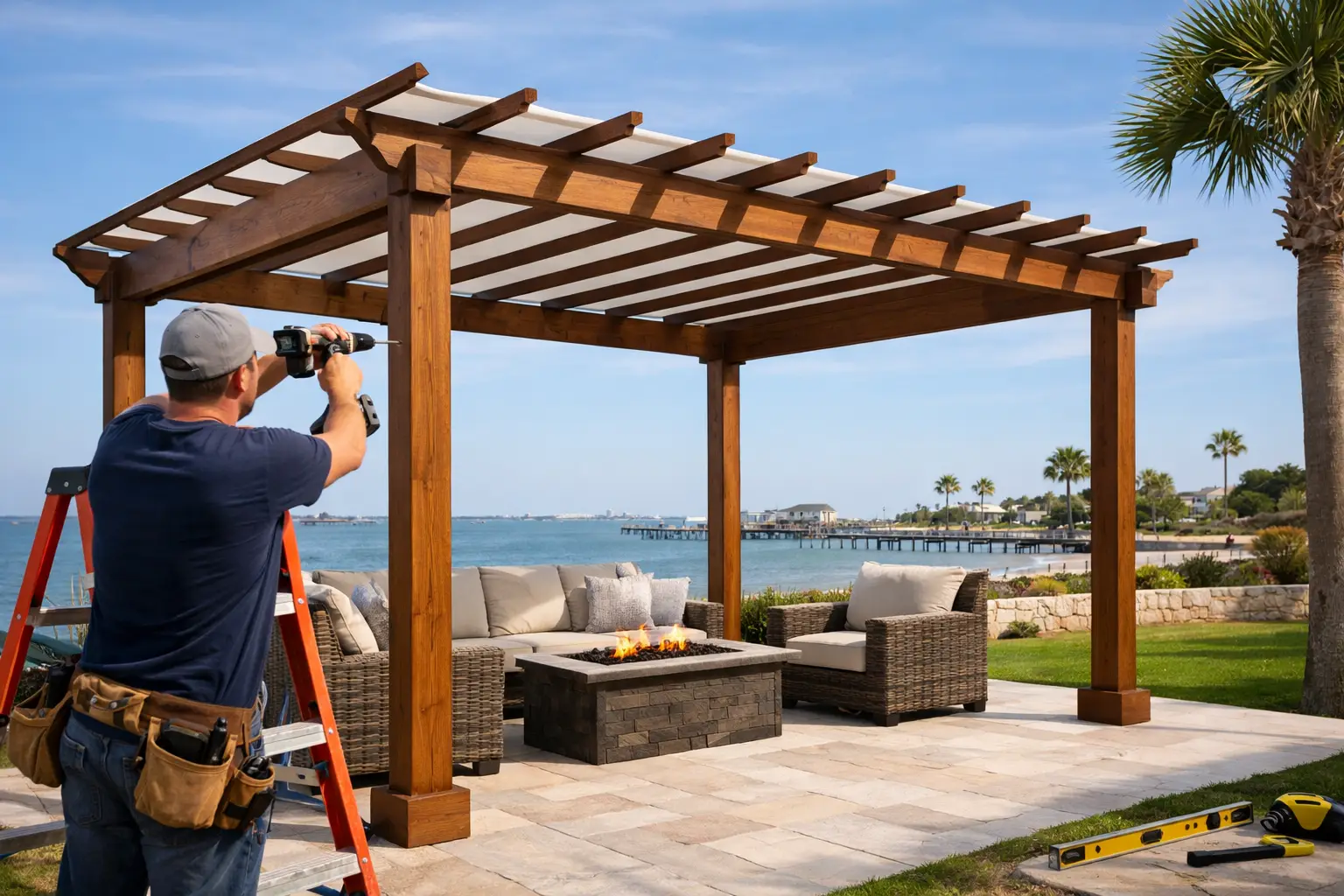
A backyard pergola looks simple on paper until you put it in a Corpus Christi yard. Sun exposure, coastal moisture, wind loads, drainage, and placement all matter more here than they would in a milder market. That is why pergola installation Corpus Christi property owners choose should start with more than a style decision. It should start with a plan built for the Coastal Bend.
For homeowners, a pergola can turn an empty patio into usable outdoor living space. For commercial properties, it can create shaded seating, improve curb appeal, and make a space feel more finished and inviting. But the difference between a pergola that holds up and one that starts showing problems early usually comes down to design, materials, and installation quality.
What matters most in pergola installation Corpus Christi projects
In this area, weather is not a side note. Heat is constant, humidity is high, and strong storms are part of the reality of owning property near the coast. A pergola has to be designed with those conditions in mind from the beginning.
That affects nearly every part of the build. Post depth, anchoring method, material selection, fasteners, and roof spacing all need to support long-term performance. A pergola that looks great on day one but is not planned for wind exposure or moisture movement can become a maintenance issue fast.
Placement matters too. A pergola over a patio may need to work around existing concrete, roof lines, drainage paths, pool decking, or outdoor kitchens. If the structure is attached to the home or built close to other features, the installation has to account for how everything functions together. This is where working with a contractor who handles broader construction scopes makes a real difference.
A pergola is not one-size-fits-all
Some clients want a simple shade structure over a back patio. Others want a more integrated outdoor living area that ties into concrete, awnings, fencing, lighting, or remodeling work already planned for the property. Those are very different projects, and they should be approached differently.
A freestanding pergola can be a good choice when you want flexibility in placement or you are creating a separate backyard feature near a pool or garden area. An attached pergola may make more sense when you want a cleaner transition from the home to the outdoor space. Neither option is automatically better. It depends on the property layout, intended use, and how much weather protection and shade you want.
There is also the question of appearance versus performance. Heavier timber styles can make a strong visual statement, but they may require more maintenance depending on the finish and exposure. Low-maintenance materials can be attractive for owners who want durability with less upkeep, but the look may differ from natural wood. The right answer usually comes down to budget, long-term maintenance expectations, and the style of the home or business.
Design choices that affect comfort and durability
Many property owners focus first on size and color, which makes sense, but the functional details are just as important. Slat spacing, orientation, height, and overall footprint can change how much shade you actually get during the hottest part of the day.
If the pergola is too open, it may look sharp but do very little to make the space more comfortable. If it is too enclosed, it can feel heavy or reduce airflow. In Corpus Christi, airflow is part of comfort. A well-designed pergola should create shade while still allowing the area to breathe.
The foundation and anchoring system are equally important. Installing a pergola over existing concrete is common, but not every slab is ideal for supporting a new structure. Sometimes the slab is in good shape and can be used with the proper anchors. Sometimes cracks, thickness concerns, or layout limitations mean a different approach is smarter. Skipping that evaluation can create problems later.
Hardware matters more than many people realize. Coastal conditions can be hard on metal components, so choosing the right fasteners and connectors is part of building for the environment, not just finishing the job quickly.
The installation process should feel organized, not stressful
A well-run pergola project starts with a conversation about how you plan to use the space. Shade for family gatherings, a more finished pool area, an outdoor break area for customers or employees – each use case affects the design.
From there, the site needs to be evaluated. Measurements, grading, slab conditions, access, and surrounding structures all play a role. In some cases, the pergola itself is straightforward, but the area around it needs prep work first. That could mean concrete work, removal of old structures, or coordination with other upgrades.
Once the design and scope are clear, the real value of working with an experienced local contractor shows up in the planning. Permitting, code considerations, material lead times, scheduling, and installation sequencing all need to be managed so the project moves cleanly from estimate to completion.
That level of coordination matters even more when the pergola is part of a larger improvement. If you are already updating a patio, replacing an awning, improving drainage, or handling exterior remodeling, having one contractor oversee the work can save time and reduce miscommunication. It also gives you one point of accountability instead of a string of separate vendors.
Why local experience matters for pergola installation Corpus Christi homes need
A pergola in South Texas has to do more than look good in a photo. It has to work on a real property in a real coastal climate. That means understanding how local weather affects materials and how local code requirements affect construction.
A contractor with experience in Corpus Christi is more likely to catch the practical issues early. They know where wind exposure may change design needs. They understand that site drainage cannot be ignored. They recognize how sun patterns affect comfort and how coastal wear can shorten the life of the wrong materials or hardware.
That local knowledge also helps with project efficiency. When a builder is familiar with the area, the process tends to move with fewer surprises. That is especially important for homeowners balancing family schedules and for commercial property managers who need work completed with minimal disruption.
Residential and commercial pergolas serve different goals
For homeowners, the goal is often lifestyle improvement. A pergola can create a better place to sit outside, host guests, or make a backyard feel more complete. It can also add visual value to the home when the design fits the architecture and the installation looks intentional.
For commercial properties, the priorities can shift. Restaurants, offices, apartment communities, and other business properties may use pergolas to define gathering areas, improve exterior appeal, or create practical shaded space for tenants and visitors. In those settings, durability, safety, and efficient scheduling become even more important.
The common thread is that both types of clients want a finished product that looks professional and lasts. They do not want to chase multiple contractors, sort out structural questions on their own, or worry about whether the build was planned correctly for the site.
Choosing the right contractor for the job
If you are comparing options, ask how the contractor approaches the full project, not just the structure itself. A pergola is part of the property, and it should be treated that way. That means looking at the slab, the surrounding layout, drainage, access, and how the new structure connects to the rest of the space.
It is also worth paying attention to communication. Good construction work is not only about craftsmanship. It is about clear expectations, accurate estimating, and follow-through from the first conversation to final cleanup.
That is where a full-service builder can offer real value. A company like Coastal Roofing and Construction is set up to handle more than one trade, which is useful when a pergola project overlaps with concrete, exterior improvements, repairs, or broader remodeling needs. Instead of patching together separate crews, you can move forward with one team that sees the whole picture.
A pergola should make your property more usable, more attractive, and better suited to how you live or do business. The best results come from treating it like a real construction project, not a quick add-on. If you start with smart design, local expertise, and a contractor who takes ownership of the process, the finished space will feel right long after the install is complete.