A flat roof usually starts leaking long before you see water dripping inside. In Corpus Christi and across the Coastal Bend, the real warning signs often show up first as ponding water, blistering, cracked seams, or soft spots around penetrations. If you are researching how to waterproof flat roofs, the goal is not just to coat the surface and hope for the best. The goal is to build a roofing system that can handle standing water, UV exposure, wind, salt air, and the kind of storms that test every weak point.
Flat roofs can absolutely perform well, but they demand the right approach. Waterproofing is part material selection, part surface preparation, and part drainage management. Miss one of those pieces, and even a good product can fail early.
How to waterproof flat roofs without wasting money
The biggest mistake property owners make is treating waterproofing like a quick patch. A bucket-applied coating from the hardware store might cover a stain for a while, but it will not fix wet insulation, failed flashing, open seams, or poor slope. That is why the first step is always understanding what condition the roof is actually in.
On a flat roof, water does not rush off the surface the way it does on a steep-slope system. It moves slowly and can sit in low areas. That means waterproofing has to protect the field of the roof, but it also has to hold up around drains, scuppers, edges, HVAC curbs, pipe penetrations, and transitions to walls. Most leaks happen at those detail areas, not in the middle of a clean membrane.
If the roof structure is sound and the existing system is still serviceable, waterproofing may involve repairs plus a compatible coating or membrane restoration. If the roof has widespread damage, trapped moisture, or repeated leak history, replacement is often the smarter investment. Spending less up front on the wrong fix usually costs more when interior damage, insulation loss, and emergency repairs stack up.
Start with inspection, moisture checks, and drainage
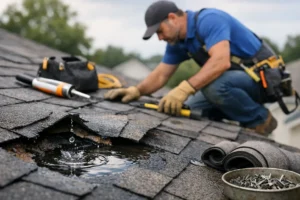
Before any waterproofing product goes down, the roof needs a real inspection. That includes checking for open laps, punctures, cracks, failed flashing, movement at penetrations, membrane shrinkage, and signs that water has gotten below the surface. On commercial properties and larger residential structures, moisture scanning or core samples may be needed to confirm whether the insulation below is dry.
Drainage matters just as much as the membrane itself. A flat roof is not meant to be perfectly flat. It should have enough slope to move water toward drains, scuppers, or gutters. If water ponds for more than 48 hours after rain, that is a sign of trouble. Some coatings are marketed as ponding-water resistant, but even then, long-term standing water shortens roof life and increases the chance of failure at seams and penetrations.
In coastal Texas, drainage problems get worse when wind-driven debris clogs outlets. A good waterproofing plan should include clearing drains, correcting low spots where possible, and making sure water has a reliable path off the roof.
Choosing the right waterproofing system
There is no single best waterproofing method for every flat roof. The right system depends on the existing roof, the age of the structure, the amount of foot traffic, budget, and how much weather exposure the building gets.
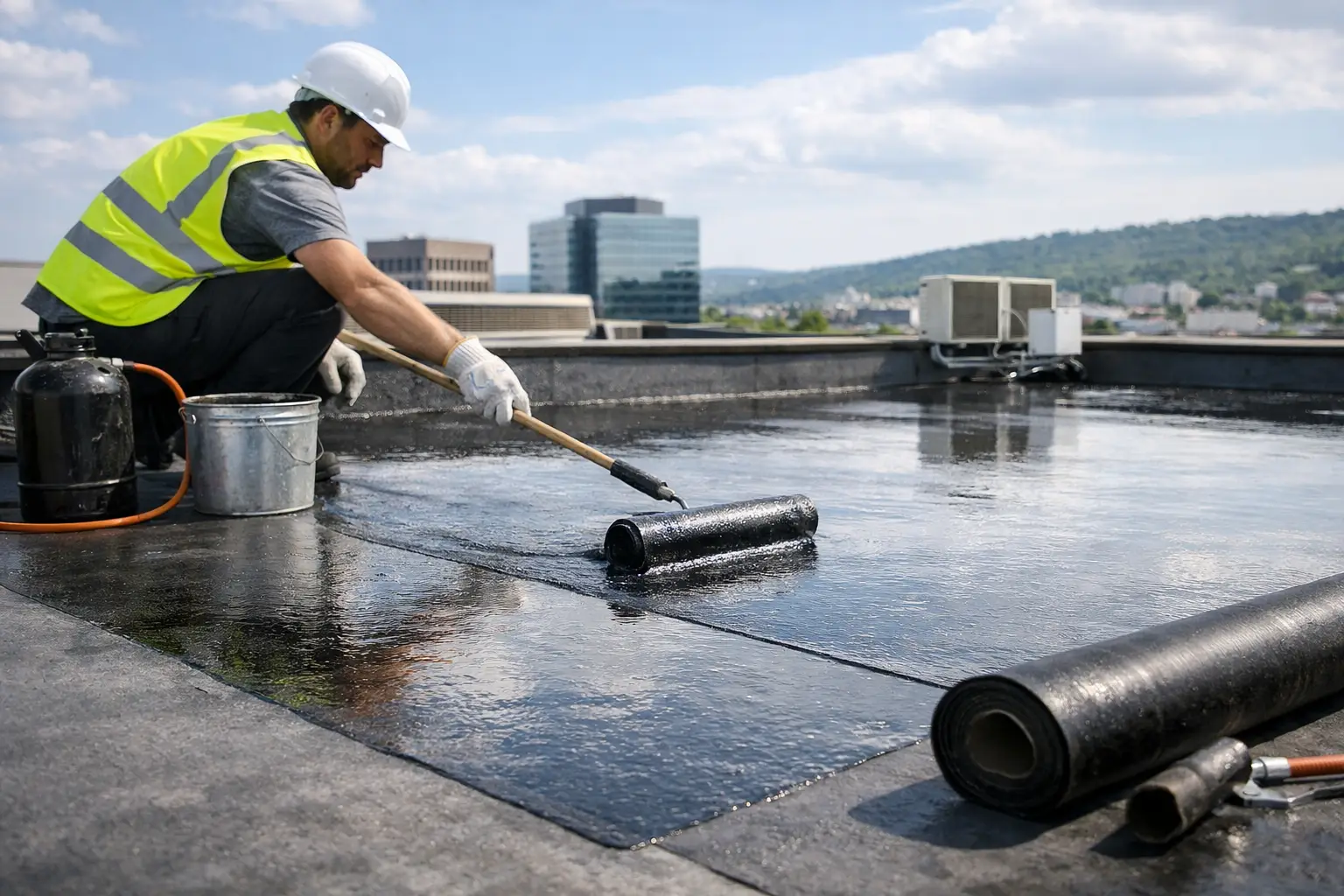
Acrylic coatings are a common option for roof restoration because they are reflective and cost-effective. They can work well in the right application, but they are not the best fit for every roof, especially where ponding water is a constant issue. Silicone coatings hold up better against standing water and UV exposure, which makes them popular on flat roofs in hot, storm-prone climates. The trade-off is that silicone can attract dirt over time and may be trickier to recoat later without proper prep.
Polyurethane coatings are known for impact resistance and are often used where foot traffic or hail exposure is a concern. Modified bitumen and built-up roofing systems can also be waterproofed or restored in certain cases, but compatibility matters. Applying the wrong coating over the wrong substrate is one of the fastest ways to create adhesion problems.
For some properties, a single-ply membrane such as TPO, PVC, or EPDM is the better long-term answer. If the current roof is too compromised for a coating system, installing a new membrane may provide more reliable waterproofing than trying to extend a failing roof.
Surface preparation is where good waterproofing starts
Even the best material will fail on a dirty or unstable surface. Flat roof waterproofing depends heavily on prep work, and this is where shortcuts show up later as peeling, blistering, or seam failure.
The roof has to be cleaned thoroughly, often with power washing, to remove dirt, salt residue, biological growth, grease, and loose material. Damaged sections need to be repaired first. Wet insulation, deteriorated decking, split seams, and failed flashing cannot simply be covered over. If they are left in place, the new waterproofing layer is being asked to bridge active problems instead of protect a sound surface.
After cleaning and repairs, primers may be required depending on the substrate and product being used. Reinforcement fabric is often added at seams, penetrations, transitions, and crack-prone areas. Those details matter because flat roofs expand and contract in the heat. The waterproofing system needs to move with the roof without tearing or separating.
The detail work matters more than most people realize
If you want to know how to waterproof flat roofs effectively, focus on the edges and penetrations. That is where roofs usually leak first.
Drains need to be sealed properly and kept clear. Scuppers have to move water freely without backing it up under the membrane. Pipe penetrations need boots or reinforced flashing that stays watertight as the roof moves. Parapet walls and roof-to-wall transitions need special attention because those joints take on water from both horizontal and vertical surfaces.
Mechanical equipment is another common weak point. Around HVAC units and curbs, waterproofing has to account for service access, vibration, and multiple flashing lines packed into a small area. A roof can look fine from ground level and still have several failure points clustered around rooftop equipment.
When repairs are enough and when replacement makes more sense
Not every flat roof needs to be torn off. If the membrane is still in decent condition and the insulation below is dry, targeted repairs plus a restoration coating can be a practical option. That approach often makes sense for property owners who want to extend service life, improve reflectivity, and avoid the cost of a full replacement right away.
But there are limits. If the roof has widespread saturation, recurring leaks in multiple areas, failed attachment, or structural concerns, coating over it is not a real solution. It is a delay. On older buildings, especially in coastal conditions, the smarter move may be replacing the system and correcting drainage, insulation, and flashing details at the same time.
That is where working with a contractor who understands both roofing and broader construction can make a difference. Waterproofing is rarely just about the top layer. Sometimes the issue involves decking repairs, edge metal, concrete work, wall transitions, or drainage modifications that need to be addressed together.
Flat roof waterproofing in Corpus Christi comes with extra demands
Coastal weather changes the equation. Salt air can accelerate wear on metal components. Heat and UV exposure break down surfaces faster. Storm season adds wind uplift risk and pushes water into small openings that might not show up in mild weather. A flat roof in South Texas has to do more than stay dry on a calm day. It has to perform under pressure.
That is why product choice and installation quality matter so much here. A system that works in a milder climate may not give the same lifespan on the coast. Local code requirements, wind ratings, fastening methods, and drainage design all play a role in whether the roof keeps doing its job year after year.
For homeowners and commercial property managers alike, the best waterproofing decision is usually the one based on actual roof condition, not just the lowest bid or the quickest promise.
How to protect the waterproofing after installation
Once the roof is waterproofed, maintenance still matters. Flat roofs should be inspected after major storms and on a regular schedule, especially before and after hurricane season. Debris should be cleared from drains and scuppers. Service contractors working on HVAC or other rooftop equipment should avoid damaging the membrane. Small issues caught early are manageable. Small issues ignored on a flat roof usually get expensive.
At Coastal Roofing and Construction, we have seen how often leak problems trace back to rushed prep, poor drainage, or detail work that looked fine until the next storm hit. Good waterproofing is not flashy. It is careful, methodical, and built for the conditions the roof actually faces.
If your flat roof is showing signs of wear, the right next step is not guessing. It is getting clear eyes on the system, understanding whether you need repairs, restoration, or replacement, and making the fix that will hold up when the weather turns.