A driveway usually tells you it is done before it completely fails. You start seeing wide cracks, low spots that hold water, edges breaking away, and patches that never quite match the original surface. When that starts happening, concrete driveway replacement options become more than a cosmetic question. They affect drainage, curb appeal, daily use, and how well the surface holds up in the Coastal Bend climate.
For property owners in Corpus Christi and surrounding areas, replacement is rarely just about pouring new concrete in the same footprint. The better question is what kind of driveway makes the most sense for your property, your traffic, and your budget. Some homeowners need a clean standard replacement that lasts. Others want a stronger slab, a decorative finish, or a layout that solves drainage and access problems the old driveway never handled well.
When replacement makes more sense than repair
Minor surface wear, one or two narrow cracks, or a small chipped corner can often be repaired. But once the slab has widespread cracking, shifting, spalling, or repeated drainage issues, repairs turn into a short-term fix. You can patch sections, but if the base underneath has failed or the concrete has reached the end of its service life, new problems usually show up right next to the old repair.
This matters even more when vehicles are heavier than they used to be. Many driveways were poured years ago for lighter traffic and simpler use. Today, homeowners may have trucks, trailers, boats, or extra parking needs. Commercial properties may deal with frequent deliveries or higher turnover. In those cases, replacement gives you the chance to build for current use instead of continuing to maintain a surface that is already underbuilt.
Concrete driveway replacement options for different needs
The most common option is a standard broom-finish concrete driveway. For many properties, this is the right call. It is cost-effective, clean-looking, slip-resistant, and easier to maintain than more decorative surfaces. If the goal is dependable performance and a fresh appearance, standard concrete is hard to beat.
A reinforced concrete driveway is the next step up when strength matters more. This may include rebar, wire mesh, or fiber reinforcement depending on the slab design and expected load. Reinforcement does not make concrete crack-proof, but it helps manage stress and improves overall durability. If the driveway will regularly support heavy vehicles, this option is worth discussing early.
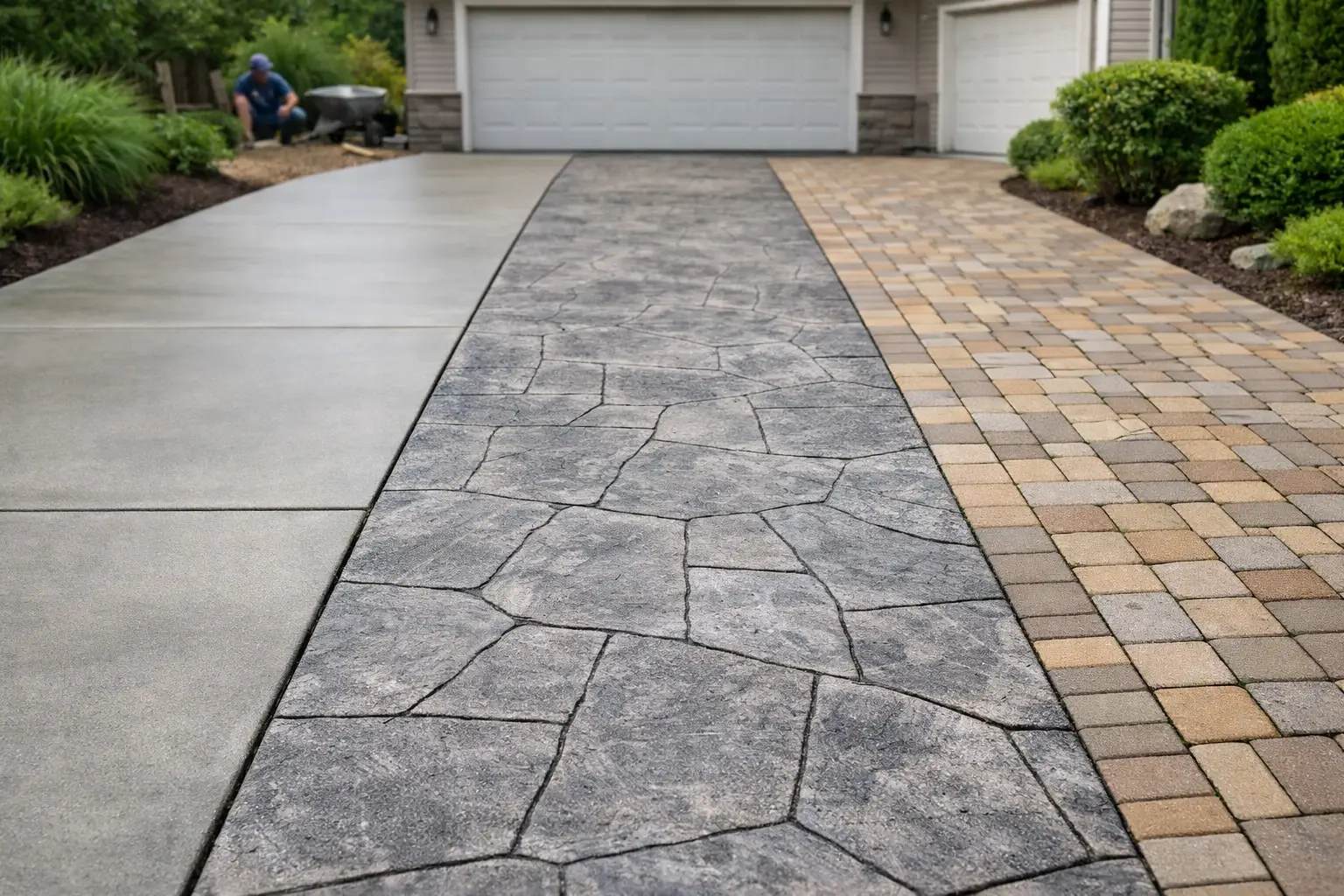
Some owners choose decorative concrete as part of the replacement. That can include stamped patterns, exposed aggregate, colored concrete, or custom border details. Decorative finishes can improve curb appeal and give the front of the property a more finished look, especially when paired with walkways, patios, or entry improvements. The trade-off is higher upfront cost and, in some cases, a little more maintenance to keep the finish looking sharp.
Another option is to replace the driveway with a revised layout rather than duplicating what was there before. Widening the drive, adding a turn-around area, adjusting approach angles, or improving tie-ins to the garage can make everyday use much easier. This is especially helpful for corner lots, homes with limited street parking, or commercial properties that need better flow.
The base matters as much as the concrete
One of the biggest mistakes in driveway work is focusing only on the surface. A driveway is only as good as the base beneath it. If the existing subgrade is unstable, too soft, poorly compacted, or holding moisture, a new slab placed on top of that problem will not perform the way it should.
A proper replacement starts with demolition, removal, grading, and base preparation. That may sound basic, but it is where long-term results are won or lost. In coastal areas, soil movement, moisture, and drainage conditions can all affect performance. A dependable contractor looks at what caused the old driveway to fail instead of just replacing the visible concrete.
Thickness also matters. Not every driveway should be poured to the same specification. A residential driveway for standard passenger vehicles may need one approach, while a property that handles work trucks or commercial traffic may need a thicker slab and stronger reinforcement. This is where experience matters, because the right recommendation depends on actual use, not guesswork.
Drainage should be part of the replacement plan
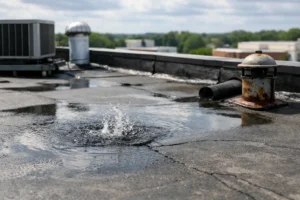
If water ponds on the existing driveway, runs toward the garage, or washes out the edges, replacement is the right time to fix it. Too many driveway projects ignore drainage and leave the same problem in place under a newer surface.
Good grading helps move water away from structures and off the slab efficiently. Depending on the site, that could involve adjusting slope, reshaping surrounding areas, or adding drainage features. It depends on the property. The key point is simple: a driveway should not just look better after replacement. It should work better when heavy rain hits.
That is particularly important along the Texas coast, where sudden storms and standing water can put extra stress on concrete surfaces and nearby foundations. A driveway that sheds water properly tends to last longer and creates fewer headaches for the rest of the property.
Residential and commercial considerations are different
For homeowners, the decision often comes down to durability, appearance, and convenience. You want a driveway that looks right with the home, handles daily traffic, and does not become a maintenance project every year. If you are already updating other exterior elements, the driveway can be part of a bigger improvement plan instead of a stand-alone fix.
For commercial property owners and managers, function usually leads the conversation. Traffic flow, loading, parking layout, and minimizing disruption matter just as much as appearance. In some cases, phased replacement may be the better option so parts of the property remain accessible during the work. Commercial projects also require careful attention to code requirements, site conditions, and project coordination.
That is where working with a contractor who handles broader construction scopes can save time. If the driveway ties into sidewalks, awnings, drainage work, parking structures, or exterior renovations, one team managing the full scope keeps the process more efficient and accountable.
Cost depends on more than square footage
Property owners often ask for a price per square foot, and that can be a useful starting point. But it is not the whole story. The actual cost of replacing a driveway depends on demolition, disposal, access to the site, grading work, base correction, thickness, reinforcement, finish selection, and any layout changes.
A simple, straight replacement on stable ground is usually more affordable than a project with extensive drainage issues or decorative upgrades. Neither option is automatically better. It depends on what the property needs and what problems you are trying to solve.
The smart move is to think beyond the initial number. A cheaper replacement that skips base repair or proper drainage may cost less now and more later. A well-built driveway usually pays off in fewer repairs, better appearance, and longer service life.
Choosing the right finish and look
Not every driveway needs a decorative finish, but appearance does matter. The driveway takes up a large visual footprint at the front of the property, so the finish should match the style of the home or building.
Broom finish remains the most practical choice for many projects because it offers traction and a clean, straightforward appearance. Exposed aggregate brings more texture and visual interest. Stamped and colored concrete can create a higher-end look, especially for custom homes or upgraded outdoor spaces. The trade-off is that decorative surfaces need good installation and, in some cases, periodic sealing to stay in top condition.
A contractor should be honest about that balance. The best-looking option on day one is not always the best long-term fit for how the property is used.
What to look for in a contractor
Driveway replacement looks simple from the street, but the quality is in the details. You want a contractor who evaluates the old slab, checks grading and drainage, explains thickness and reinforcement options, and gives you a clear plan for preparation and installation.
Communication matters just as much as workmanship. Property owners should know what will be removed, how access will be managed, how long curing may affect use, and what to expect during cleanup. A professional process reduces surprises and keeps the project moving.
For Coastal Bend properties, local experience is not a small advantage. Soil conditions, weather exposure, and stormwater behavior are different here than in other parts of Texas. A team that understands those conditions can recommend concrete driveway replacement options that make sense for this region, not just generic solutions. That is part of how Coastal Roofing and Construction approaches exterior projects – with a full view of how the surface, structure, and site all work together.
If your driveway is cracking, settling, or holding water, replacement is a chance to fix more than the surface. The best result is not just newer concrete. It is a driveway built for the way your property actually works, with fewer problems after the job is done.