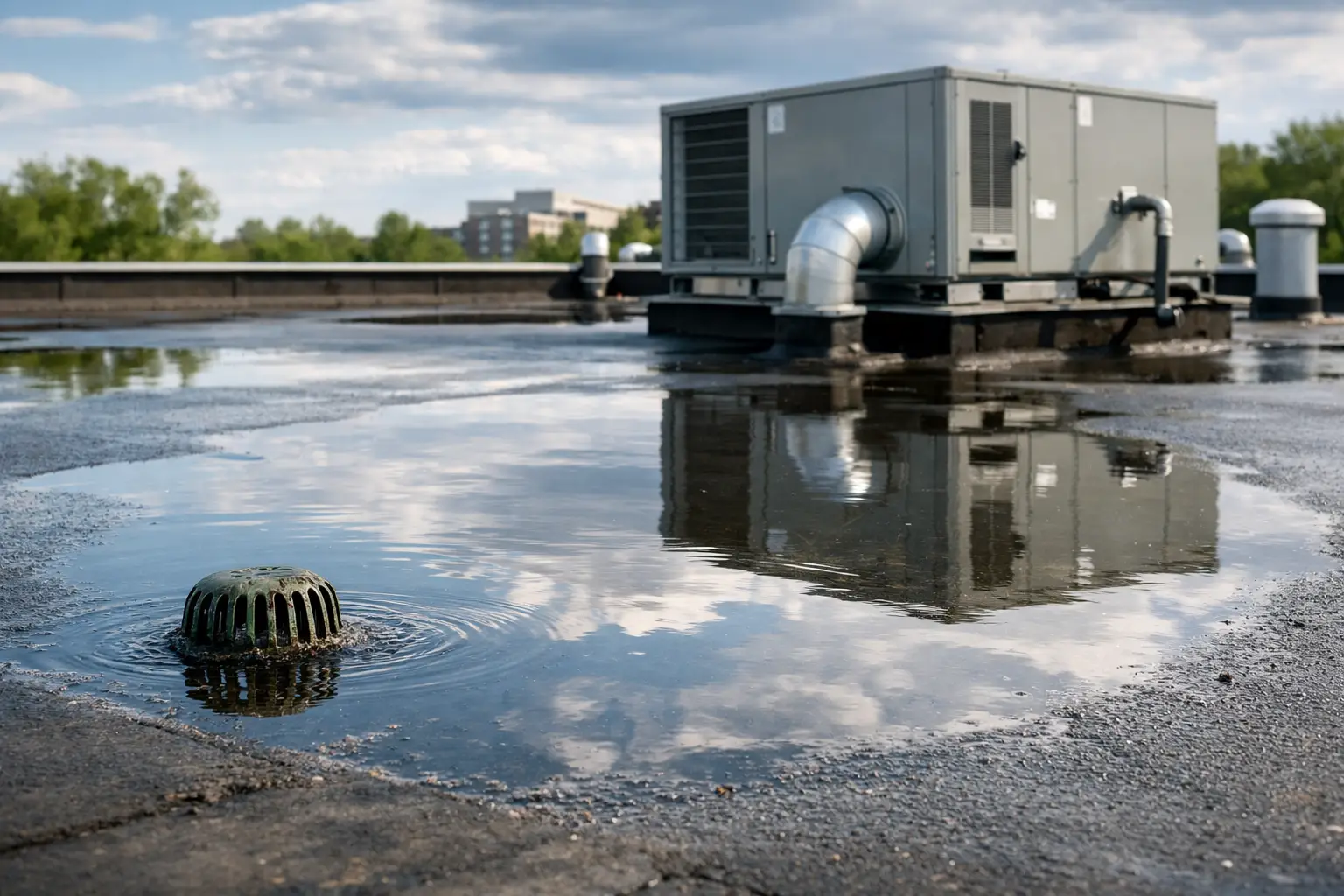
You usually notice ponding after a hard rain when the rest of the roof starts drying and one section still looks like a shallow pond. If you have been asking what causes flat roof ponding, the short answer is this: water stays put when the roof cannot move it to the drains, scuppers, or edges the way it was designed to.
On a flat roof, a little temporary standing water right after a storm is not unusual. The problem starts when that water lingers for more than a day or two, keeps coming back in the same spots, or starts showing up alongside leaks, soft areas, staining, or membrane wear. Along the Texas coast, where heavy rain, wind, heat, and salt air all put stress on roofing systems, ponding can move from minor nuisance to expensive repair faster than many property owners expect.
What causes flat roof ponding in the first place?
Despite the name, flat roofs are not truly flat. They are built with a slight slope so water can move off the surface. When that slope is too shallow, interrupted, or altered over time, water collects in low areas instead of draining away.
In many cases, ponding is not caused by one single defect. It is usually a combination of design, age, weather, and maintenance issues. A roof may have started out draining well, then settled over time, picked up debris around drains, or developed compression in the insulation below the membrane. That is why two buildings with similar roofs can behave very differently after the same storm.
Poor drainage is one of the biggest culprits
If the drainage system is blocked, undersized, or poorly placed, water has nowhere to go. On commercial buildings and low-slope residential sections, that often means clogged interior drains, scuppers blocked by leaves, dirt buildup at drain bowls, or gutters that back up during heavy rain.
Even a well-installed membrane will struggle if the drainage plan is weak. A roof needs enough outlets in the right locations to handle normal rainfall and the heavier storms that hit this region. If water has to travel too far across the roof surface, or if one side of the roof holds more runoff than the drains can keep up with, ponding becomes more likely.
This is also where maintenance matters. A drain that worked fine last season can become a problem after one windy storm drops branches and debris onto the roof.
Drain placement and sizing matter more than many owners realize
A drain can be technically present and still not solve the problem. If it sits slightly higher than the surrounding low spot, water will remain around it. If there are too few drains for the roof area, they may be overwhelmed in heavy rain. If the roof has equipment curbs, parapet walls, or other obstructions, those features can interrupt water flow and create isolated pockets.
That is why ponding issues often need more than a patch. The membrane may not be the root cause at all.
Roof slope problems often develop over time
One of the clearest answers to what causes flat roof ponding is inadequate slope. Sometimes that issue starts during original construction. Other times it develops gradually as the building settles or as roofing materials compress under years of foot traffic, heat, and moisture.
Low-slope roofs rely on precision. Small changes in elevation can make a big difference in how water moves. If the structure settles in one area, if tapered insulation was not designed correctly, or if reroofing added layers without correcting the drainage plane, a low spot can form and hold water.
This is especially common on older buildings. A roof that has gone through multiple repairs or overlays may look serviceable from the ground while hiding uneven surfaces that trap water after every storm.
Structural deflection can create recurring low spots
Some ponding comes from the roof deck itself sagging between supports. That can happen due to age, moisture damage, excessive load, or long-term structural movement. When the deck dips, the roofing system above it dips too.
In that situation, treating only the surface symptoms will not fully solve the problem. If the underlying deck or framing is deflecting, the repair plan has to address the support below the membrane as well.
Compressed insulation and roofing layers can hold water in place
Low-slope roofs are built as systems, not just top membranes. Under the surface, insulation boards and cover boards help create slope, support the membrane, and protect the building. If those layers become saturated, damaged, or compressed, they can create depressions that trap water.
This sometimes happens around rooftop equipment, service paths, or areas that see repeated foot traffic. It can also happen when moisture gets into the roofing assembly and weakens materials below the visible surface. Once those materials lose shape, water naturally returns to the same spot.
The trade-off here is that not every low area means the entire roof has failed. In some cases, a localized repair can rebuild that section. In others, widespread saturation or compression points to a larger system problem.
Installation mistakes can lead to chronic ponding
Not every ponding issue is about age. Some roofs start showing drainage problems early because the roof was never built to move water correctly.
Common installation-related causes include poor taper design, uneven substrate preparation, drains set at the wrong height, membrane details that interfere with flow, or flashing and edge conditions that hold water back. On reroof projects, problems also come up when new materials are installed over an uneven existing surface without correcting the low spots underneath.
A roof can still look clean and professionally finished while having hidden drainage flaws. That is one reason ponding should be evaluated by someone who understands the full roof assembly, not just the visible top layer.
Debris, rooftop equipment, and traffic all play a role
Flat roofs collect things. Leaves, dirt, branches, packaging, fasteners, and even windblown trash can gather around drains and corners. Once that buildup starts, it slows water movement and makes ponding worse.
Rooftop units and penetrations can also redirect water in ways the original roof design did not account for. A new HVAC curb, conduit run, or equipment platform can interrupt drainage paths and create low-flow areas. Add regular service foot traffic, and the roof surface may wear or compress unevenly around those features.
For business owners and property managers, this is a practical issue more than a technical one. The more activity a roof sees, the more important routine inspection becomes.
Why ponding water is more than a cosmetic problem
Standing water adds weight, speeds up membrane wear, and raises the risk of leaks. It can break down seams, stress flashing details, and increase UV damage as the water evaporates and leaves behind residue. If the roof already has weak points, ponding will find them.
Over time, repeated ponding can also shorten the service life of the entire roof. On some systems, warranty terms may even depend on proper drainage and maintenance. That is why waiting for an interior leak is usually the expensive route.
Along the Coastal Bend, frequent rain events and heat cycles can make the problem more aggressive. Water that sits today may be gone tomorrow, but the damage from repeated saturation, expansion, and surface deterioration keeps building.
When a ponding problem needs professional attention
If water remains on the roof longer than 48 hours after rainfall, it is time to have it looked at. The same goes for recurring puddles in the same locations, visible sagging, bubbling in the membrane, interior water stains, or signs that drains are not keeping up.
A proper evaluation should look at the drainage layout, roof slope, condition of the membrane, insulation, deck, and any structural movement. Sometimes the solution is straightforward, like drain cleaning or localized repair. Sometimes it takes tapered insulation, drain modifications, or more extensive replacement work to fix the cause instead of the symptom.
For property owners in Corpus Christi, that local experience matters. Coastal Roofing and Construction understands how flat roofs perform under Gulf Coast weather and how to spot the difference between a maintenance issue and a design problem.
The best way to prevent flat roof ponding
The best prevention is a combination of good design, solid installation, and regular maintenance. Roofs should be inspected after major storms and on a routine schedule, especially on commercial buildings or homes with low-slope sections. Drains and scuppers need to stay clear. Any new rooftop equipment should be reviewed for drainage impact. Small low spots should be watched before they become bigger failures.
Not every puddle means you need a new roof, and not every dry-looking roof is draining well. What matters is whether the roof is consistently moving water off the surface the way it should. Catching the cause early gives you more repair options, lower costs, and a better chance of extending the roof’s life.
If your flat roof keeps holding water after storms, treat that as a warning sign, not a waiting game. A roof that drains correctly protects more than the building above your head – it protects the investment underneath it.